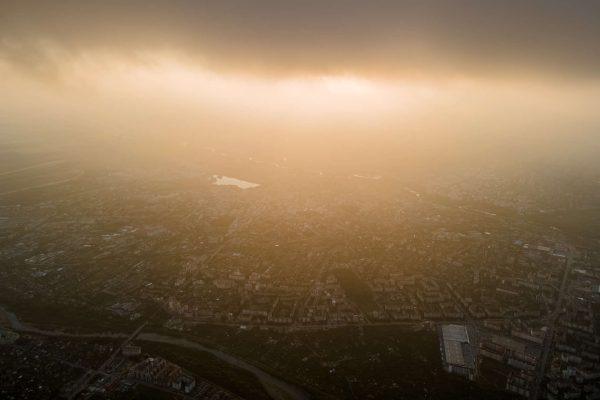
The rapid expansion of data centers in Texas, driven by the artificial intelligence boom, threatens to undo two decades of air quality improvements. A new report from the Houston Advanced Research Center (HARC) warns that if developers power their facilities with private natural gas plants, nitrogen oxide emissions could increase by up to 400% by 2031.
Texas has become a magnet for tech companies seeking to build massive computing hubs. At least 288 large-scale data center projects are planned or under construction across the state. These facilities require enormous amounts of electricity—equivalent to about one-third of the entire U.S. generating capacity—and developers are increasingly turning to on-site natural gas engines to meet their power needs quickly.
Why private gas plants are so polluting
The report highlights a critical bottleneck: connecting to the state's main electrical grid can take three to five years. To avoid delays, many data center developers are installing their own natural gas generators. These on-site engines emit roughly four times more pollutants per unit of energy than the grid, which increasingly relies on solar and wind power.
This trend is particularly concerning for communities near these facilities. The increased emissions of nitrogen oxides and particulate matter can lead to chronic respiratory illnesses, especially affecting vulnerable populations. In Texas, where Latino communities often live near industrial zones, the health impacts could be severe.
“The relentless search for power to fuel AI is backing environmental preservation into a corner,” said a HARC researcher. “We’re sacrificing air quality for the sake of faster processor deployment.”
Permit freeze, but approvals continue
In response to the growing concern, Governor Greg Abbott issued an executive order directing the Texas Commission on Environmental Quality (TCEQ) to temporarily suspend air emission permits for data centers. However, citizen monitoring groups report that the agency continues to process applications behind closed doors. Investigations have revealed at least 35 regulatory actions taken after the order, including preliminary notices for major gas plants that could release millions of tons of pollutants annually.
This bureaucratic loophole has deepened public distrust. Community organizations are demanding greater accountability and transparency, arguing that data centers must take responsibility for their environmental footprint. The lack of legislative safeguards has left many Texans wondering if their health is being traded for tech profits.
Similar concerns are emerging in other states. In New Mexico, Oracle’s proposed $165 billion data center is facing water and power scrutiny. And in Texas, researchers are exploring wastewater as a potential lifeline for these facilities, though such solutions are still in early stages.
The HARC report also notes that the state’s environmental progress between 2002 and 2024—when air pollution controls were tightened and air quality improved—could be reversed. The projected increase in emissions would not only affect urban centers like Houston and Dallas but also rural areas where data centers are often sited.
“We’re not just talking about a minor setback,” said an environmental advocate. “This could erase 20 years of cleaner air in a single decade.”
While the tech industry argues that AI development is crucial for economic growth and national competitiveness, the human cost is becoming harder to ignore. For Latino families in Texas, who are already disproportionately affected by economic and health disparities, the added pollution could be devastating.
The state legislature has yet to pass comprehensive laws to regulate data center emissions. Meanwhile, the TCEQ’s automated permit system was recently shut down after data centers bypassed the pause, raising further questions about enforcement.
As the AI race accelerates, Texas stands at a crossroads. Will it prioritize short-term tech gains over the long-term health of its residents? The answer will determine whether the state can maintain its environmental legacy or become a cautionary tale for the rest of the nation.