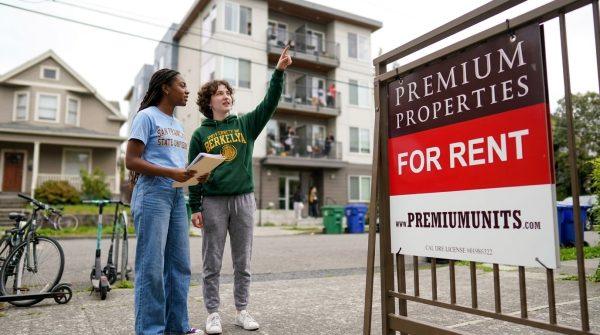
For many college students in California, the struggle to find affordable housing has become as stressful as finals week. In cities like San Luis Obispo, where Cuesta College student leader Shaun Chilton notes that four students often squeeze into a single bedroom, the crisis is acute. Now, state leaders are stepping in with a package of laws and funding designed to speed up the construction of student housing and offer some relief.
Streamlining construction and cutting red tape
Governor Gavin Newsom signed five new laws in late 2026 aimed at cutting through environmental bureaucracy and legal delays that have long slowed residential projects on and near public university campuses. One of the key measures, Assembly Bill 1732, authored by Democratic Assemblymember David A. Alvarez, exempts affordable public university housing projects from lengthy reviews under the California Environmental Quality Act. This allows construction to move forward both on campus and beyond, without the costly legal battles that have previously stalled such projects.
Another law, Senate Bill 916 by Democratic Senator Angelique V. Ashby, empowers courts to require financial performance bonds from groups that file frivolous lawsuits solely to block construction. This is designed to deter obstructionist tactics and keep projects on track. Additionally, Assembly Bill 2480 increases density bonuses for private developers who reserve at least 24% of their units for lower-income students, building on earlier measures like Assembly Bill 2011 from 2022.
These changes don't directly cap rents, as market conditions still dictate final prices. But by reducing development costs and delays, the hope is that more housing will come online, easing the pressure on students who are currently paying exorbitant off-campus rents.
Targeted funding and support for vulnerable students
Beyond streamlining, the state is putting money where its mouth is. Proposition 1, a bond measure, directs $350 million to the University of California and California State University systems, split evenly, to finance roughly 1,200 new student housing slots. This is part of a larger $11.25 billion bond package that also includes $1.25 billion for veteran home loans and funding for multifamily housing, tribal communities, and agricultural workers. The state estimates the general fund bonds will cost between $500 million and $600 million annually over 25 years.
Assembly Bill 2766 requires community colleges and CSU campuses to give housing priority and waive upfront fees for students who are unhoused or former foster youth. These students also get priority access to the state's NextUp program, which offers specialized housing assistance. UC campuses are participating voluntarily, respecting their constitutional autonomy.
Regional projects are already moving forward. UC Santa Barbara is advancing a residential complex slated for fall 2028, thanks to a 2025 law that requires the California Coastal Commission to accept the university's parking assessments. Santa Monica College has partnered with Michael's Student Living to build housing for 750 students, with technical support from the Student Homes Coalition.
While these measures won't solve the housing crisis overnight, they represent a significant step toward ensuring that students can focus on their studies rather than worrying about where they'll sleep. As Kate Rodgers of the Student Homes Coalition puts it, this is about creating a lasting housing lifeline that protects the academic future of California's students.