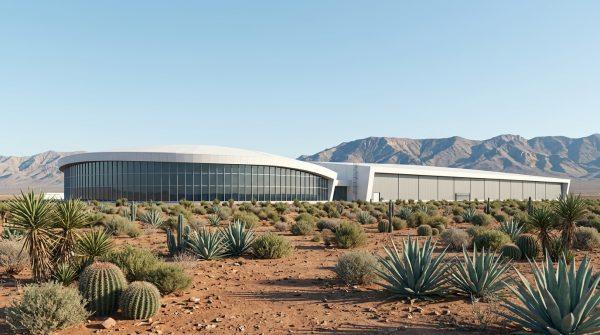
In the high desert of Doña Ana County, New Mexico, the future of artificial intelligence is taking shape on a 1,400-acre campus known as Project Jupiter. Led by infrastructure developer Stack Infrastructure, with Oracle as the anchor tenant, this $165 billion investment is one of the largest tech projects in the region's history. But as construction accelerates, so do questions about water, power, and the true cost of progress in a land where every drop counts.
Last week, project executives opened the gates to the public, offering a rare look at the active construction site in Santa Teresa. Visitors walked through electrical generation areas, equipment yards, and the shells of future data halls—still empty of servers but buzzing with activity. The message was clear: Project Jupiter is on schedule, and Oracle is doubling down on its commitment to New Mexico.
“Project Jupiter remains on our planned schedule. We are fully committed to New Mexico and confident in our path forward,” Oracle said in a statement. The company also highlighted its economic footprint: more than 3,600 construction workers, including over 1,000 New Mexico residents, have logged 2.8 million hours on site. Oracle projects $4.7 billion in economic benefit for the state.
Water and energy: engineering for a fragile desert
One of the biggest concerns in this arid border region is water. Data centers are notoriously thirsty, but Project Jupiter’s first building, Building A, uses a closed-loop cooling system that recirculates refrigeration water instead of drawing continuously from local aquifers. Josh Timberlake, senior vice president of site strategy at Stack Infrastructure, explained that this design minimizes water consumption—a critical feature in a place where drought is a way of life.
On the energy front, the facility is integrating fuel cells from Bloom Energy, which generate electricity through an electrochemical process using natural gas, avoiding conventional combustion. This technology is expected to cut nitrogen oxide emissions by about 92% compared to original plans. Still, environmental analysts note that natural gas remains a fossil fuel, and the full greenhouse gas footprint won’t be known until the data halls are operational.
The project has also drawn attention to the broader trend of AI data centers along the Texas-New Mexico border, where similar concerns about climate and water are mounting.
Jobs and community investment: a mixed bag
Beyond the infrastructure, Project Jupiter promises significant local benefits. Around 4,400 construction workers are currently employed, with 1,200 hailing from New Mexico and over 600 from Doña Ana County. The workforce is expected to peak at 7,000 as construction continues. Recruiters have already begun hiring for about 1,500 permanent positions in technical, operational, and administrative roles.
The financial impact is already visible: between January and June, Oracle’s presence generated nearly $80 million in state and local tax revenue. A community agreement commits $50 million to municipal water upgrades (80% already funded), $360 million for schools and public services, and $6.9 million for workforce training through Doña Ana Community College, plus funding for the Boys & Girls Club of Las Cruces, drinking water access, and wildlife habitat restoration.
But not everyone is convinced. During a Q&A session, local grassroots leaders pressed for guarantees that economic gains won’t come at the expense of groundwater. They want firm commitments that the region’s natural resources will be protected, not just promises of jobs and tax revenue.
“We’re not against progress,” said one community organizer, who asked not to be named. “But we need to ensure that our children and grandchildren will still have water to drink and air to breathe.”
Regional monitoring boards will now track power grid demand and water usage at every stage of development, offering a layer of oversight that could serve as a model for other tech hubs in the Southwest.
The bigger picture: AI’s footprint on the border
Project Jupiter is more than a local story—it’s a symbol of the AI boom’s physical demands. As tech giants race to build data centers, rural communities like Santa Teresa are becoming the new frontiers of digital infrastructure. The challenge is balancing innovation with sustainability, and economic growth with environmental stewardship.
For now, Oracle and Stack Infrastructure are betting that technology can solve the problems it creates. But as the desert sun beats down on the construction site, the real test will come when the servers start humming and the water meters start turning.
For more on how this region is evolving, check out our coverage of Miami’s own real estate bets and the economic pressures facing American families.