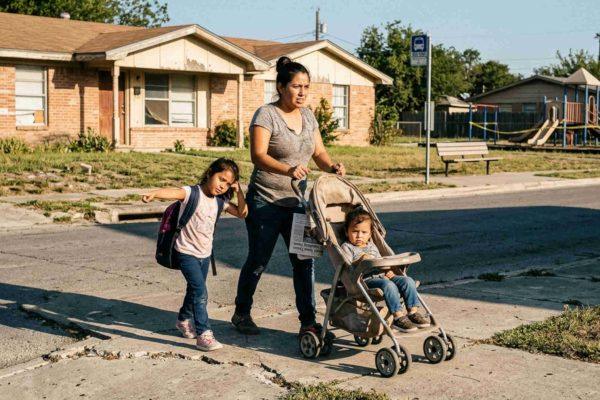
If you're a Latino parent in Texas weighing where to put down roots, a new report from personal finance site WalletHub might give you pause. The study, which evaluated 182 cities across the United States on 45 metrics spanning education, healthcare, safety, housing costs, and recreational opportunities, found that a majority of Texas urban centers fall short when it comes to creating a supportive environment for families.
Among the lowest-ranked Texas cities are Corpus Christi (rank 153), San Antonio (137), Houston (136), Dallas (135), and Brownsville (119). These cities scored poorly on key indicators like the percentage of families living below the poverty line, access to quality schools, and crime rates. For example, Brownsville recorded one of the highest poverty rates among all cities analyzed, directly dragging down its overall well-being score. Corpus Christi, meanwhile, earned the dubious distinction of having the fewest entertainment options for households.
The Divide Within the Lone Star State
Not every Texas city fared poorly. A handful of municipalities managed to break into the top half of the national ranking, thanks to stronger public investment and more favorable socioeconomic conditions. Plano led the state at rank 4, followed by Austin (22), Amarillo (74), Grand Prairie (85), and Fort Worth (87). These cities demonstrated better outcomes in education, safety, and family-friendly amenities.
The contrast highlights a stark reality: within the same state, the quality of life for families can vary dramatically depending on local governance and economic priorities. As Texas housing market heats up, Latino families in particular may find themselves priced out of the better-ranked suburbs while struggling with limited services in lower-ranked urban centers.
WalletHub's methodology considered factors like school quality, healthcare access, housing affordability, and recreational opportunities. Cities like Laredo (91), Irving (96), Arlington (103), Garland (113), El Paso (122), and Lubbock (126) also landed in the bottom half, underscoring a widespread pattern across the state.
For Latino communities, these findings are especially relevant. Many of the lowest-ranked cities—San Antonio, Brownsville, El Paso, Laredo—have majority-Latino populations. The data suggests that systemic challenges in education, healthcare, and economic opportunity disproportionately affect these communities. As three Texas towns where residents believe they can live to 100 show, longevity and well-being are closely tied to local conditions.
The report serves as a wake-up call for policymakers and families alike. While Texas continues to attract newcomers with its job growth and relatively low cost of living, the quality of life for families—especially in South Texas—remains uneven. As Texas housing: why renting may be smarter than buying right now suggests, financial flexibility might be key for families navigating these disparities.
Ultimately, the WalletHub analysis underscores that raising a family in Texas requires careful consideration of local conditions. For Latino families, the choice between affordability and opportunity is often a difficult one—and this report makes clear that many Texas cities still have a long way to go.