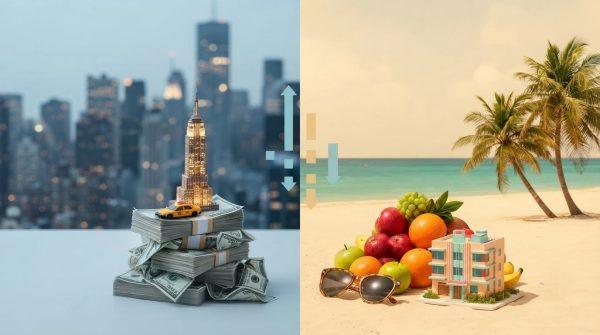
For decades, Miami was the affordable alternative to New York—a place where Latinos from Cuba, Colombia, Venezuela, and beyond could build a life without the crushing expenses of the Northeast. That era has officially ended. According to data from the U.S. Bureau of Economic Analysis processed by Bloomberg, the cost of living in Miami has now surpassed New York City, making the South Florida corridor the second most expensive metropolitan area in the country, behind only the San Francisco Bay Area.
This shift didn't happen overnight. Since 2019, consumer prices in Miami have climbed more than 36%, hitting everyday essentials like utilities, groceries, and even a night out at a restaurant. In some categories, daily spending in Miami now outpaces Manhattan. Yet the median household income in the region remains below the federal median, creating a painful gap for the working families who power the city's economy—from the cubanos running corner cafés in Hialeah to the Venezuelan entrepreneurs setting up shop in Doral.
What's Driving the Surge?
The post-pandemic real estate boom has been the main culprit. Housing values in South Florida shot up 79% in just a few years, fueled by an influx of new residents from high-tax states and countries, as well as investors eyeing the market. Property taxes followed, rising 62% since 2019—far outpacing the national average. For many families, that means a mortgage or rent that eats up a much larger chunk of their paycheck than it did just five years ago.
Then there's the insurance crisis. Florida's vulnerability to hurricanes has driven many private insurers to pull out of the state, leaving homeowners with fewer options and sky-high premiums. The average annual policy now costs over $8,290, a burden that hits everyone—whether you live in a beachfront condo in Brickell or a modest home in Kendall. State officials have held talks to address the issue, but so far, relief has been slow to arrive.
Florida's longtime selling point—no state income tax—has been all but neutralized by these rising costs. While wealthy newcomers and corporations continue to flock to Miami for its business-friendly policies, the local working class bears the brunt of the speculation. Middle-income families, many of them Latino, are finding it harder to balance their budgets, and some are being pushed to peripheral counties like Broward and Palm Beach, stretching their commutes and their patience.
Impact on the Latino Community
Miami has long been a cultural and economic hub for Latinos across the Americas. But as costs rise, the city risks losing the very people who make it vibrant. Essential workers—from hospitality staff to healthcare aides—are being priced out of neighborhoods they helped build. Community organizations have started hosting workshops on budgeting and financial planning, but structural change is needed.
Local legislators have introduced proposals aimed at curbing the crisis, including potential subsidy funds for low-income families. But the clock is ticking. The city's global competitiveness could suffer if it becomes unaffordable for the talent that drives its growth. Meanwhile, the ripple effects are already being felt: a slowdown in traditional retail, longer commutes, and a growing sense of uncertainty among families who once saw Miami as a land of opportunity.
In the midst of this, Miami remains a magnet for celebrities and athletes. The arrival of Lionel Messi has reshaped the real estate market in Brickell, with luxury developments like Cipriani Residences seeing a surge in sales. But for the average Latino family, the dream of owning a home in the Magic City is slipping further away. As one local economist put it, "Miami's cost of living is an invisible brake on the city's soul."
For now, South Florida families are recalculating every penny. The question is whether the city can find a way to balance its growth with the needs of the communities that made it great.