Federal authorities in the United States have issued a warning about a growing check fraud scheme that relies on a common household product: nail polish remover. The method, known as chemical check fraud, allows criminals to physically alter stolen checks by erasing the original ink and rewriting them with higher amounts or different payees. This scam is hitting communities across the country, including Latino neighborhoods where many families still rely on paper checks for rent, utilities, and remittances to relatives in México, Guatemala, El Salvador, and beyond.
The scheme works like this: organized criminal rings intercept mail from residential mailboxes or street collection boxes, targeting envelopes that appear to contain checks. Once they have a check, they apply acetone—the active ingredient in nail polish remover—to the paper. The solvent dissolves the ink without damaging the check's security features, allowing them to rewrite the payee name and amount. The altered check is then deposited through an ATM or mobile banking app, often before the account holder notices anything wrong.
According to the United States Postal Inspection Service, these scams account for over $1.5 billion in annual losses. In some cases, criminal networks can launder up to $50,000 a day using accounts held by financially vulnerable individuals recruited as money mules. The problem has become so severe that major banking institutions are urging customers to abandon paper checks entirely and switch to electronic transfers.
How to Protect Yourself from Chemical Check Fraud
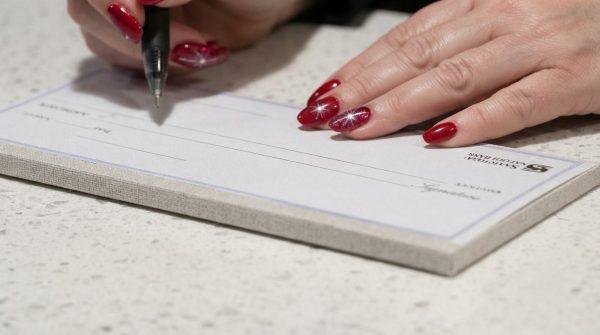
While the shift to digital payments is the most effective defense, there are immediate steps you can take to reduce your risk. Security experts recommend using black gel ink pens when writing checks—the gel ink is absorbed into the paper fibers and is much harder to erase chemically. Avoid dropping mail in public street mailboxes; instead, take it directly to a post office or hand it to a postal carrier. And monitor your bank accounts regularly for any suspicious activity.
For Latino homeowners in New York, there's an added layer of concern: the NY STAR property tax relief program sends checks to eligible residents, making them potential targets. Similarly, Texas's $1,500 check initiative could attract scammers looking for high-value mail. If you're expecting any government or financial check, consider opting for direct deposit whenever possible.
The Federal Reserve and the Consumer Financial Protection Bureau have endorsed stricter monitoring protocols and the adoption of biometric verification systems. Banks are deploying digital filters that can detect forged signatures and chemically altered amounts, but these measures are not foolproof. The most reliable way to avoid becoming a victim is to reduce your reliance on paper checks altogether.
This scam is not limited to the United States. Similar schemes have been reported in México and other Latin American countries, where check usage remains common for business transactions and remittances. The FBI is also investigating a separate $300 million money laundering case involving the Argentina Football Association, highlighting the broader challenges of financial crime in the region.
As the financial system evolves, experts predict that chemical check fraud will accelerate the move toward fully digital banking. But for now, the best defense is awareness. If you or someone in your family still uses paper checks, share this information. A simple switch to a gel pen or an electronic payment could save thousands of dollars.