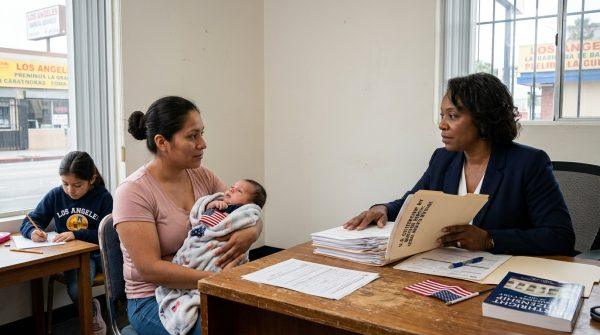
For generations, the promise of birthright citizenship has been a cornerstone of American identity—a guarantee that any child born on U.S. soil is automatically a citizen, regardless of their parents' immigration status. But in 2026, that promise faces its most serious legal challenge in over a century. The Supreme Court is expected to rule on an executive order that would restrict citizenship for children of undocumented immigrants and those on temporary visas, sparking a fierce debate that cuts to the heart of what it means to be American.
The controversy began when the Trump administration pushed forward with measures aimed at reinterpreting the 14th Amendment, which has long been understood to grant citizenship to anyone born in the United States and subject to its jurisdiction. Civil rights organizations, including the ACLU and the Mexican American Legal Defense and Educational Fund (MALDEF), quickly filed lawsuits to block the order, arguing that the executive branch lacks the authority to unilaterally alter a constitutional right without congressional approval. As a result, the measure remains temporarily blocked across the country, but the legal battle is far from over.
What's at Stake for Latino Communities
For Latino families, the stakes couldn't be higher. According to the Migration Policy Institute, an estimated 4.5 million U.S.-born children live with at least one undocumented parent. If the Supreme Court upholds the executive order, these children—and future generations—could be denied passports, Social Security numbers, and the basic rights of citizenship. This would create a new class of stateless individuals, many of whom have deep roots in communities from Los Angeles to Houston to New York.
“This isn't just a legal technicality,” says María Teresa Kumar, president of Voto Latino. “It's an attack on the fundamental principle that all people are created equal. Latino families have built their lives here, and their children deserve the same opportunities as anyone else.” The ruling could also affect families with mixed immigration status, where one parent is a citizen or legal resident and the other is undocumented. In such cases, the child's citizenship would depend on the parents' status, creating a bureaucratic nightmare for thousands of households.
The debate has also reignited discussions about the historical context of the 14th Amendment. Ratified in 1868, it was designed to grant citizenship to formerly enslaved people and their descendants. For over 150 years, it has been interpreted to include anyone born on U.S. soil, with few exceptions. The current administration argues that this interpretation is too broad, claiming that the phrase “subject to its jurisdiction” was meant to exclude children of foreigners who are not fully subject to U.S. law. But constitutional scholars counter that this reading contradicts decades of precedent, including the landmark 1898 case United States v. Wong Kim Ark, which affirmed birthright citizenship for children of Chinese immigrants.
As the Supreme Court prepares to hear oral arguments, the political pressure is mounting. The justices must weigh the executive order against the separation of powers, determining whether a change of this magnitude can be implemented through an executive order or requires a formal legislative process. A ruling in favor of the government would mark a dramatic shift in U.S. immigration policy, potentially leading to a patchwork of state-level laws and further litigation.
For now, Latino families are left in a state of uncertainty. Community organizations are ramping up legal assistance and outreach efforts, helping parents understand their rights and prepare for any outcome. In cities like Chicago and Miami, workshops are being held to explain the implications of the ruling and to provide resources for those who may be affected. The presence of ICE at major events has already heightened fears, and this legal battle adds another layer of anxiety.
Ultimately, the Supreme Court's decision will define the future of birthright citizenship in America. Whether it upholds the 14th Amendment or allows the executive order to stand, the ruling will have lasting consequences for millions of families. As the nation watches, one thing is clear: the fight for citizenship is far from over, and Latino communities are at the forefront of the struggle.