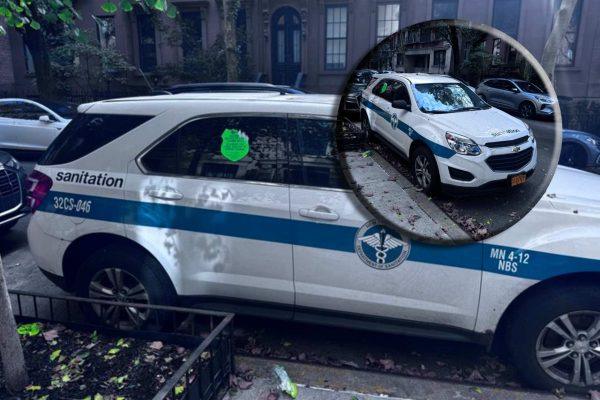
New York City streets have a new kind of parking drama. A fed-up driver, tired of the city's aggressive alternate side parking enforcement, decided to give the Department of Sanitation a taste of its own medicine. Instead of quietly paying the $65 fine, this motorist peeled off the neon green 'shame sticker' from their own windshield and stuck it right onto the window of an official Sanitation vehicle.
The image, captured by Catherina Gioino, a news editor at Fortune, quickly went viral on social media. It shows the city car parked along a row of residential townhouses, its driver's side window now bearing the unmistakable bright placard that has become a symbol of civic frustration. The Department of Sanitation was quick to clarify that no city employee was responsible for the sticker; a spokesperson told reporters that a disgruntled motorist had taken matters into their own hands.
A controversial comeback
The 'shame stickers' made their official return to city streets in August, after Manhattan Council Member Gale Brewer pushed through legislation to overturn a decade-long ban on the practice. The idea is simple: slap a large, hard-to-remove warning on the windshields of cars that block street sweepers during designated cleaning hours. The stickers are meant to deter repeat offenders, but they've also sparked a wave of public backlash.
Many residents and state lawmakers argue that applying sticky notices to private property borders on government-sanctioned vandalism. The adhesive is notoriously stubborn, requiring warm water and scrapers to remove, which only adds to the frustration. For a city that prides itself on diversity and resilience, this parking tactic feels heavy-handed to many.
This isn't just a New York story. Across the country, cities are experimenting with creative—and sometimes controversial—ways to enforce parking rules. Dallas has deployed the Barnacle device to clamp down on repeat offenders, while California is moving toward automated enforcement for driverless vehicles. The question remains: where do you draw the line between public order and personal property?
For Latino drivers in the city, many of whom rely on cars for work—whether delivering food, driving for ride-share apps, or commuting to construction sites—these stickers add an extra layer of stress. A ticket can mean a hit to an already tight budget, and the public humiliation of a bright green placard feels personal. It's no wonder some are pushing back.
The Department of Sanitation, for its part, hopes that state legislators in Albany will eventually pass automated camera enforcement bills. That would allow street sweepers to document violations electronically, eliminating the need for physical stickers altogether. Until then, the battle between drivers and the city continues on the streets of Brooklyn, Queens, and the Bronx.
As one viral moment shows, sometimes the best way to protest a rule is to turn it on its head. Whether this act of rebellion changes policy remains to be seen, but it's certainly given New Yorkers something to talk about—and maybe a little laugh.