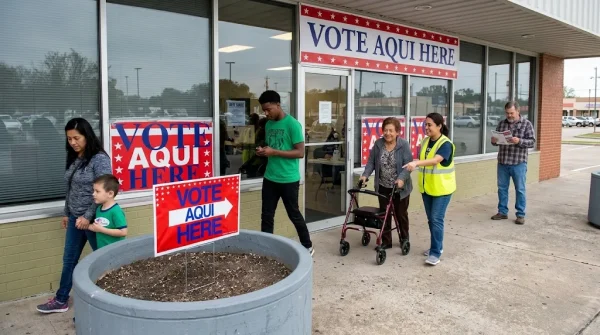
When the dust settled on the 2026 midterms, one thing was clear: Latino voters had made their presence felt. From the barrios of San Antonio to the suburbs of Miami, turnout among Latino communities reached levels that surprised even seasoned political analysts. The result? A reshaped congressional map and a new set of priorities in Washington.
In Texas, a state that has long been a Republican stronghold, the Latino vote proved decisive. According to early data, Latino voters turned out in numbers that flipped several key districts, giving Democrats control of the state's delegation for the first time in decades. "This wasn't a fluke," said María Fernanda López, a political organizer in Houston. "It was years of grassroots work, of knocking on doors, of building trust. People finally felt like their vote could change something."
The shift wasn't limited to Texas. In Florida, where the GOP has made inroads with Cuban American and Venezuelan American voters, the margin narrowed significantly. While the state's Republican line held, the close results sent a message: Latino voters are not a monolith, and their concerns are evolving. "We're seeing a generation that cares about the economy, about healthcare, about education," said Carlos Méndez, a professor of political science at Florida International University. "They're not voting based on a single issue. They're looking at the whole picture."
A New Civic Energy
This surge in participation didn't happen overnight. Community organizers point to years of investment in civic education, particularly among young voters. In cities like Los Angeles, Chicago, and Phoenix, voter registration drives and get-out-the-vote efforts paid off. "We saw a 20% increase in turnout among 18-to-29-year-olds," said Elena Ramírez, a coordinator with the Southwest Voter Registration Education Project. "These are kids who grew up seeing their parents struggle with immigration status, with economic insecurity. They're determined to make their voices heard."
The energy is palpable in places like small towns where Latino families are thriving, where local elections often see the highest participation. "It's not just about the big races," said Ramírez. "People are showing up for school board meetings, for city council hearings. They understand that these local decisions affect their daily lives."
This civic awakening is also reshaping the national conversation. With more Latino representatives in Congress, issues like immigration reform, healthcare access, and economic opportunity are moving to the forefront. "We're no longer just a voting bloc to be courted every two years," said Representative Alexandria Ocasio-Cortez, who campaigned for several Latino candidates in Texas. "We're the ones setting the agenda."
Uncertainty Remains for Immigrant Families
Despite the electoral gains, many Latino families still live under the shadow of uncertainty. The future of the Deferred Action for Childhood Arrivals (DACA) program remains in legal limbo, and Immigration and Customs Enforcement (ICE) continues to conduct raids in some communities. "The election results give us hope, but they don't change the fact that my parents could be deported tomorrow," said Jessica Torres, a DACA recipient in Dallas. "We need more than symbolic victories. We need real change."
That sentiment is echoed by community leaders who worry that the political shift could lead to a backlash. "We've seen this before," said López. "When Latino voters become more visible, there's often a pushback. We need to stay vigilant and keep organizing."
In the meantime, the focus is on turning electoral momentum into tangible improvements. In Texas, where food insecurity remains a pressing issue, new representatives are pushing for expanded SNAP benefits and other assistance programs. "We can't forget that behind every statistic is a family struggling to put food on the table," said López.
The road ahead is uncertain, but for many Latino voters, the 2026 midterms marked a turning point. "We've shown that we have the power to shape our own destiny," said Méndez. "Now we have to use it."