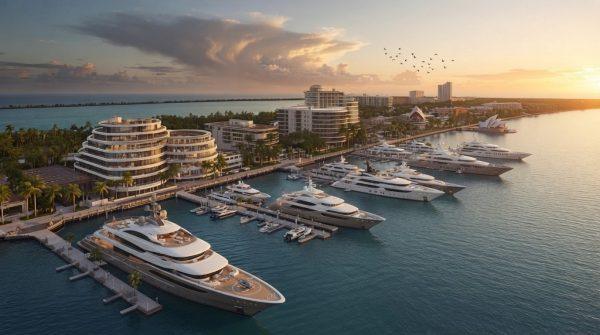
Miami has long been a magnet for those seeking sun, style, and a favorable tax climate. But in recent years, the influx of billionaires has reached a fever pitch, turning the city into a playground for the world's richest—and a pressure cooker for everyone else. From Mark Zuckerberg's $170 million purchase on Indian Creek to Jeff Bezos and Ken Griffin planting their flags, the ultra-wealthy are reshaping Miami's skyline and its social fabric.
The trend isn't just about buying a vacation home. It's a strategic relocation of capital and lifestyle. Florida's lack of state income tax is a powerful lure, and the pandemic accelerated a shift that was already underway. As these titans of tech and finance move in, they bring not only their checkbooks but also their entourages, security teams, and private jets—transforming neighborhoods and driving up prices.
The Billionaire Enclaves: Where Money Meets Water
Indian Creek, often called the "Billionaire Bunker," is a private island that has become the ultimate status symbol. Zuckerberg's acquisition in March is just the latest in a series of eye-popping deals. The area has seen over $517 million in sales of properties priced above $60 million in recent years, according to real estate experts. Key Biscayne and North Bay Road are also hotspots, with the latter boasting a concentration of luxury homes worth around $1.7 billion.
These aren't just houses; they're compounds with private helipads, boat docks, and security systems that rival small fortresses. The scarcity of waterfront land makes these properties even more coveted, and the competition is fierce. As one broker put it, "It's not about the square footage anymore—it's about the location and the exclusivity."
The Cost of Living: A Tale of Two Cities
While billionaires enjoy their ocean views, longtime Miamians are feeling the pinch. The cost of living in the Miami metro area has surpassed that of New York, according to recent analyses. Consumer prices have jumped 36% since 2019, and housing costs have soared 79% post-pandemic. For many locals, the dream of owning a home in the city they grew up in is slipping away.
This isn't just a Miami problem—it's a reflection of broader economic trends. The wealth of the top 0.1% has multiplied nearly thirteen times over the past fifty years, according to the Inequality Index from UC Berkeley. As that wealth concentrates in coastal cities, it pushes out the middle class and exacerbates inequality.
Tax Breaks and Insurance Woes
Florida's tax policies are a major draw for the wealthy. No state income tax means more money in their pockets, and the state's business-friendly climate is a bonus. But there's a flip side: homeowners insurance premiums are the highest in the nation due to hurricane risks. That's a cost that even billionaires have to bear, though for them it's a drop in the bucket compared to the average family.
For locals, the combination of high insurance, rising property taxes, and inflated home prices is a triple whammy. The city's new tiny home rules are an attempt to address the affordability crisis, but they're a drop in the ocean compared to the tidal wave of wealth.
The Cultural Shift: More Than Just Money
Miami's transformation isn't just economic—it's cultural. The city has always been a vibrant hub of Latino culture, with strong ties to Cuba, Colombia, Venezuela, and beyond. As the ultra-wealthy move in, there's a risk that the city's character could be diluted. But many locals are determined to preserve what makes Miami unique.
"Miami is not just a playground for the rich," says Maria, a third-generation Miamian. "It's a place where cultures collide and create something beautiful. We can't let that be lost." The influx of billionaires brings new restaurants, galleries, and nightlife, but it also threatens to price out the artists and musicians who give the city its soul.
What's Next for Miami?
As the wealth migration continues, experts are watching for signs of a bubble. The demographic trend shows a slight population decrease recently, which could indicate that the market is cooling. But for now, the demand for luxury properties shows no signs of slowing down.
For those who can't afford the billionaire lifestyle, there's always the option to look beyond Miami. California's affordability crisis has driven many families to other states, and Miami could face a similar exodus if costs continue to rise. But for now, the city remains a beacon for the rich and famous, and its future is as uncertain as it is exciting.
One thing is clear: Miami is changing, and the rest of the world is watching. Whether that change is for better or worse depends on how the city balances the needs of its longtime residents with the ambitions of its newest arrivals.