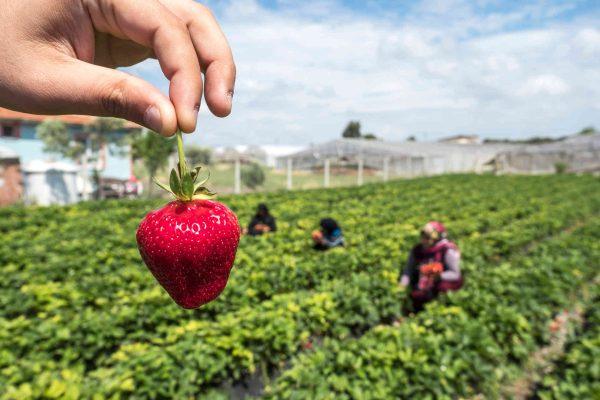
In a move that has sent shockwaves through Ventura County's agricultural community, SoCal Berry Growers has announced the closure of all six of its strawberry farms, leaving 572 workers without jobs starting in January. The formal notice, filed with the Oxnard City Council, complies with California's WARN Act, which requires a 60-day advance warning for mass layoffs. The affected workers are primarily field harvesters who supply major distributors like Driscoll's, and their families now face an uncertain future.
A financial crisis beneath the strawberry fields
The company cites unsustainable financial losses as the primary reason for the shutdown. According to industry data, the last growing season saw production costs exceed $815 million across the United States, while wholesale revenues in Ventura County alone reached $808 million—a gap that left growers operating in the red. Local agricultural spokespeople argue that no corporation can sustain such losses indefinitely, and that the closures are a necessary, if painful, business decision.
But the UFW (United Farm Workers) union sees a different motive. In a heated dispute that has escalated in recent months, union representatives accuse SoCal Berry Growers of shuttering the farms as direct retaliation for the historic unionization vote that took place mid-year. That vote marked the first time in over a decade that farmworkers in the region successfully organized, and the union believes the company is trying to avoid negotiating a fair collective bargaining agreement.
“This is a clear attempt to evade the bargaining table,” said a UFW spokesperson. “These workers have a legal right to unionize, and shutting down operations is a blatant violation of that right.”
The union has vowed to pursue every legal avenue available to defend the workers' rights, including filing charges with the National Labor Relations Board. The dispute highlights the ongoing tension between agricultural employers and labor organizers in California, where farmworkers have long fought for better wages and working conditions.
Oxnard's history of agricultural booms and busts
For Oxnard, a city with deep roots in the strawberry industry, this is not the first time major agribusiness has pulled up stakes. Over the years, several large farms have scaled back operations or closed entirely, leaving hundreds of Latino families—many of them immigrants from México and Central America—to scramble for alternative employment. The cyclical nature of the industry, coupled with rising operational costs and labor disputes, has made stability elusive for farmworker communities.
The impact extends beyond the workers themselves. Local businesses that depend on farmworker spending, from grocery stores to schools, will feel the ripple effects. The city of Oxnard, which has been working to diversify its economy, now faces another challenge as it tries to support displaced workers and their families.
For the broader Latino community in California, this story resonates with a long history of agricultural labor and the fight for workers' rights. The UFW, founded by César Chávez and Dolores Huerta, has been a cornerstone of that struggle, and this latest battle is a reminder of how far the movement has come—and how much work remains.
As the January closure dates approach, the 572 workers—459 of them fruit harvesters—must decide their next steps. Some may seek jobs in other agricultural sectors, while others might consider leaving the area altogether. The uncertainty is compounded by the ongoing union dispute, which could delay or alter the closure timeline.
In the meantime, community organizations and local agencies are stepping in to provide resources and job training. But the road ahead is steep, and the outcome of the UFW's legal challenge could set a precedent for how similar disputes are handled in the future.
This story is a stark reminder of the fragility of the agricultural economy and the human cost behind the strawberries on our tables. As the situation unfolds, Latino World News will continue to follow the developments and the impact on the families at the heart of this crisis.