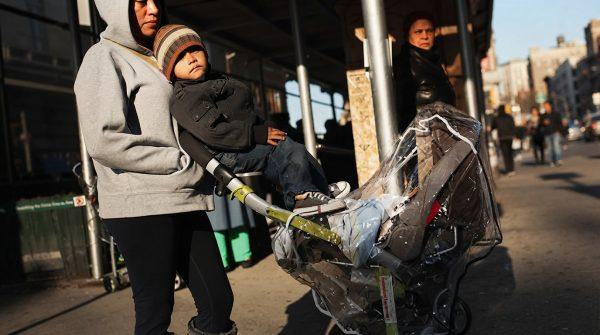
Across the United States, a troubling paradox persists: affordable housing units remain vacant while millions of low-income families, including many in the Latino community, struggle to find stable shelter. In major cities like Austin, Denver, and Portland, newly built affordable properties sit empty, yet unhoused individuals sleep in shelters or on the streets. This disconnect highlights deep flaws in how the nation addresses its housing crisis.
According to the National Low Income Housing Coalition, nearly 11 million extremely low-income renter households nationwide face a severe shortage of affordable options. These households—often low-wage workers, seniors, and people with disabilities—must spend more than half their income on rent and utilities, leaving little for food, healthcare, or other basics. For many Latino families, who are disproportionately represented among low-wage workers, the situation is especially dire.
Why affordable units remain empty
One key reason is that federal financing programs, such as the Low Income Housing Tax Credit, prioritize households earning at least 50% of the area median income (AMI). This leaves the poorest renters—those earning below 30% of AMI—with few options. Developers, seeking financial viability, often set rents at levels that mirror market rates, making the units unaffordable for the very people they are meant to serve.
In Austin, for example, vacancy rates for units priced at 60% of AMI have reached 16%, according to CoStar Group data. Denver and Portland also report high vacancies—13% and 7.5%, respectively. Yet, the average rent for these units, $1,444, is only slightly below the private market average of $1,581, making them out of reach for many minimum-wage workers.
For renters like Jaiden Barbee, the cumbersome verification processes and long waiting lists push them toward private market rentals, even at higher costs. “It’s easier to pay more than to deal with the endless paperwork,” Barbee said. This sentiment echoes across many Latino communities, where language barriers and lack of familiarity with the system can further complicate access.
Policy gaps and funding shortfalls
Federal housing vouchers, which provide direct rental assistance, are a more effective tool than complex tax credits, according to economists like Chris Edwards of the Cato Institute. Testifying before Congress, Edwards argued that the current system is “overly complicated and expensive” and suggested that assistance should be delivered directly to families. However, funding limitations mean that only a fraction of eligible households receive vouchers, leaving millions without support.
Local municipalities face monumental challenges in meeting housing production targets for extremely low-income demographics. In Austin, a projected 20,000 homes between 2018 and 2027 resulted in only 543 completions by 2024. This shortfall underscores the persistent mismatch between designated rent levels and the actual purchasing power of the community.
Developers like Carmen Romero of True Ground Housing Partners explain the financial reality: a unit for 60% AMI generates only $140 after covering operational costs. “Deeper affordability levels are simply unsustainable without additional subsidies,” Romero said. This financial strain discourages developers from targeting the lowest-income renters.
Latino families and the search for stability
For Latino families, the housing crisis is not just about numbers—it’s about daily survival. Many work in essential jobs but cannot afford to live near their workplaces. The lack of affordable options forces them to make impossible choices between rent, food, and healthcare. Community organizations and housing advocates emphasize that targeted subsidies and simplified application processes are crucial to bridging the gap.
Some cities are exploring innovative solutions, such as affordable housing lotteries that aim to make the process more transparent and accessible. Others are looking at zoning reforms to allow for more diverse housing types. However, these efforts are often piecemeal and underfunded.
As the crisis deepens, the need for systemic change becomes more urgent. Policymakers must prioritize the needs of the poorest renters, not just those who are moderately low-income. For Latino families and all vulnerable communities, the promise of affordable housing remains unfulfilled—a promise that requires bold action and sustained commitment.