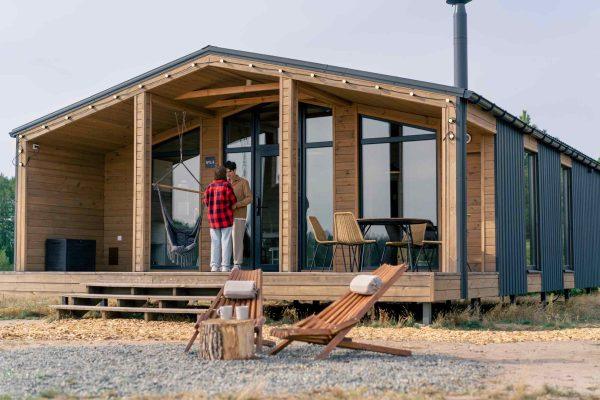
As of September 1, Texas has officially leveled the playing field for manufactured housing. Senate Bill 785, signed into law earlier this year, strips away many of the municipal hurdles that have long made it harder to place a HUD-code manufactured home on a residential lot. For many Latino families across the state—especially in fast-growing areas like the Rio Grande Valley, San Antonio, and the Dallas–Fort Worth corridor—this could mean a more affordable path to homeownership.
What SB 785 changes
The new law amends the Texas Manufactured Housing Standards Act, part of the state Occupations Code. Under the updated rules, cities can no longer demand special use permits, discretionary approvals, or zoning variances for HUD-code manufactured homes if they don't require the same for traditional site-built houses in the same residential zone. In plain terms: if a neighborhood allows a stick-built home, it must also allow a HUD-code manufactured home.
This is a significant shift. Previously, many municipalities used zoning rules to push manufactured housing to the outskirts or block it altogether, despite the fact that these homes are built to federal standards and can be just as safe and durable as conventional construction. The new law aims to end that kind of discrimination.
Faster approvals and fairer fees
SB 785 also imposes strict timelines. Local governments now have 45 days to process and respond to installation applications. If they miss that window, the application is automatically approved—unless they reject it in writing with a valid reason. That's a big win for homeowners and installers who previously faced months of delays.
The law also prohibits cities from charging extra transportation or installation bonding fees to licensed installers beyond what's actually needed to cover the cost of moving the structure. That removes another layer of unnecessary expense that often got passed down to buyers.
Historic districts and deed restrictions
Not everything changes overnight. The law includes carve-outs for designated historic districts and cultural landmarks. Cities can still enforce historic preservation ordinances and can include properties in local historic zones. Also, deed restrictions that were in place before January 2, 2025, remain valid, and municipalities where all residential zones had active deed restrictions banning manufactured housing before September 2025 are exempt.
That means some older neighborhoods with restrictive covenants will still be off-limits, but for the vast majority of Texas communities, the new rules open the door.
Bipartisan support and what it means
The bill was authored by Republican Senator Pete Flores, with co-author Paul Bettencourt, and sponsored in the House by Representatives Ryan Guillen and Janie Lopez. It passed with strong bipartisan support during the 2025 regular session. That kind of backing reflects a growing recognition that manufactured housing is a key piece of the affordable housing puzzle—not just in Texas, but across the country.
For Latino families, who make up a significant share of Texas's population and often face higher housing cost burdens, this could be a game-changer. The ability to place a quality, affordable home on a lot you own—without fighting city hall—removes a major barrier to building generational wealth.
As the state continues to grow, and as weather patterns and other factors put pressure on housing markets, measures like SB 785 offer a practical solution. It's not a silver bullet, but it's a solid step toward making the American dream more accessible for more Texans.
If you're considering a manufactured home, now might be the time to explore your options. And if you're in a city that's slow to adapt, remember: the law is on your side.