When you fill a glass from the kitchen tap in Los Angeles, Chicago, or Miami, you trust that it's safe. But a new study suggests that the water flowing into millions of homes across the United States may carry far more of a class of toxic chemicals known as PFAS than federal reports indicate. In fact, the actual contamination could be double what official monitoring suggests.
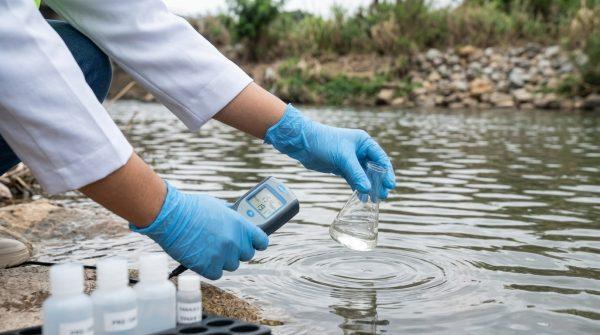
The research, published in Cell Reports Sustainability, analyzed data from the Environmental Protection Agency's monitoring program, which tracks 29 PFAS compounds in community water systems. Led by hydrologist Gehendra Kharel of Texas Christian University, the team examined 1.86 million individual measurements from nearly 10,000 water systems across the country. Their findings are sobering: current methods may capture only 44% of the estimated total PFAS concentration.
Why the numbers are skewed
The problem lies in how non-detectable results are handled. In 98% of the samples, PFAS levels fell below the laboratory's detection limit. Standard practice treats these as zero, but that assumption is misleading. Just because a chemical isn't detected at a certain threshold doesn't mean it's absent. By substituting zeros for these low-level readings, the data omits a significant portion of the actual contamination.
Kharel and his colleagues argue that this practice creates a false sense of security. "When we ignore these low-level detections, we're essentially saying the water is cleaner than it really is," Kharel said in a statement. "Our models suggest that the true average concentration could be more than twice what federal reports show."
PFAS, often called "forever chemicals," are used in everyday products like non-stick cookware, waterproof clothing, food packaging, and cosmetics. They don't break down easily in the environment, so they accumulate in soil and water. Long-term exposure has been linked to increased risks of certain cancers, liver damage, thyroid disease, and developmental issues in children.
The study's authors are not alone in calling for change. Bruce Rittmann, an environmental engineer at Arizona State University who develops water treatment technologies, agrees that the current approach is flawed. "Utilities and regulators need to look at the full spectrum of PFAS, not just the few that are regulated," he said. "Ignoring results below detection limits misleads the public about the true level of contamination."
The EPA has set strict health advisories for two of the most common PFAS compounds, PFOA and PFOS, at 4 parts per trillion. But the agency declined to comment on the study's specifics. Meanwhile, researchers are pushing for more transparent reporting and the use of statistical models that can estimate concentrations below detection limits, rather than simply assigning zeros.
For Latino communities, this issue hits close to home. Many Latino neighborhoods, particularly in cities like San Antonio, Phoenix, and the agricultural valleys of California's Central Valley, rely on municipal water systems that may be under-monitored. A 2020 study by the University of California, Berkeley found that Latino communities are more likely to be exposed to contaminated drinking water than non-Latino white communities. The new research suggests that these disparities could be even greater than previously thought.
In response, some states are taking action. California, for example, has proposed stricter limits on PFAS in drinking water, and New Jersey has already adopted some of the most stringent standards in the nation. But federal regulations remain the baseline, and many experts argue that the EPA's current approach is insufficient.
Kharel and his team plan to continue refining their models as new data becomes available. They hope that by highlighting the hidden risks, they can push for better testing protocols and, ultimately, safer water for all Americans.
In the meantime, consumers can take steps to reduce their exposure. Home water filters that use activated carbon or reverse osmosis can remove many PFAS compounds. But experts caution that not all filters are equally effective, and maintenance is key.
As the debate over water safety continues, one thing is clear: the current system may be underestimating the problem. And for the millions of families who turn on their taps every day, that's a risk we can't afford to ignore.