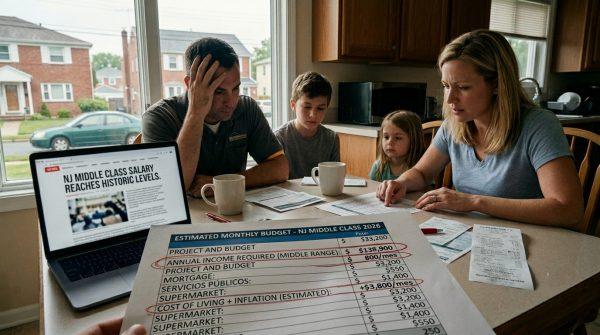
For many Latino families in New Jersey, the question of what it takes to be middle class has never been more pressing. In 2026, the numbers are stark: to be considered middle class in the Garden State, a household needs to earn between $69,529 and $208,588 per year, according to Pew Research Center methodology. That places New Jersey second in the nation, just behind Massachusetts, in terms of the highest income thresholds for middle-class status.
The median household income in New Jersey now sits at $104,294 annually, a figure that reflects the state's high cost of living, especially in areas near New York City. For families in Jersey City, the situation is even more intense: the lower threshold to enter the middle class there is $67,167, with an upper limit of $201,502. That puts Jersey City at number 18 on the list of U.S. cities with the highest middle-class income requirements.
But not every part of New Jersey tells the same story. In Newark, the numbers are dramatically different. There, the middle-class income range starts at just $38,993, one of the lowest among the 100 urban areas analyzed in a recent SmartAsset study. This disparity highlights how deeply local geography affects purchasing power, even within the same state.
Why the Gap Matters for Latino Families
For Latino communities, these numbers aren't just statistics. They shape decisions about where to live, how to budget, and what kind of future families can plan. In cities like Jersey City, where rents have been dropping recently—a trend that offers some relief to tenants—the cost of housing still eats up a large share of income. Meanwhile, in Newark, lower thresholds might make it easier to qualify as middle class, but they also reflect a weaker local job market and fewer opportunities for upward mobility.
The high cost of living in New Jersey is driven largely by housing and utilities, especially in counties that border New York. A salary that would feel generous in other parts of the country barely covers the basics here. That's why experts emphasize that understanding these thresholds is essential for family planning, particularly in an environment where inflation continues to push up the price of everyday goods.
State economic policies also play a role. The way wealth is distributed, through taxes, subsidies, and public services, directly affects how far a middle-class income goes. For Latino families, who often work in sectors like construction, hospitality, and healthcare, these policies can make the difference between stability and struggle.
Navigating the New Jersey Economy
So what can families do? Specialists recommend tracking these income thresholds closely and aligning household budgets with real local costs. That means not just looking at a salary number, but understanding what it buys in your specific city or town. For example, a family earning $80,000 in Newark might have a very different quality of life than one earning the same amount in Jersey City.
It's also worth noting that the middle-class label isn't just about income. It's about the ability to cover expenses like housing, healthcare, education, and transportation without constant financial stress. In New Jersey, that's becoming harder even for households earning six figures.
For those looking to stretch their dollars, programs like New Jersey's Welcome World Rewards offer a way to earn points and even win World Cup tickets by supporting local businesses. And for families considering a move, the soaring housing market in California serves as a cautionary tale of how quickly affordability can slip away.
Ultimately, the numbers tell a clear story: being middle class in New Jersey requires more than just a good job. It demands careful planning, awareness of local economic conditions, and a willingness to adapt. For Latino families, who have long navigated complex economic landscapes, this is just another challenge to meet with resilience and resourcefulness.