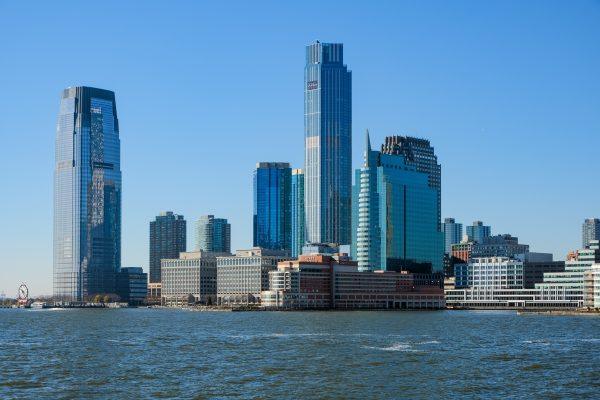
For anyone trying to rent in New York City right now, the numbers are brutal. Manhattan's vacancy rate hovers below 2%, and the median cost for a one-bedroom apartment has hit a historic $4,680 a month. That kind of sticker shock is pushing many working-class families—including a significant number of Latino renters—to look beyond the boroughs for relief. And just across the Hudson River, Jersey City is emerging as a genuine alternative.
According to a recent report from the rental platform Zumper, Jersey City's median one-bedroom rent now sits at $2,860 per month. That's a 22% drop from its mid-2024 peak of $3,430, when post-pandemic migration from Manhattan drove prices through the roof. The correction is largely thanks to an aggressive wave of new apartment construction that flooded the market with inventory, giving tenants more leverage than they've had in years.
How Jersey City's Construction Boom Reshaped the Market
The story here is about supply catching up with demand. After the pandemic, developers rushed to build thousands of residential units in Jersey City, anticipating a permanent exodus from Manhattan. When all those new apartments hit the market at once, landlords had to compete for tenants. The result: prices fell sharply. By August 2025, the average one-bedroom had bottomed out at $2,650. Since then, rates have stabilized at $2,860, which still represents a 2.1% year-over-year decrease.
This dynamic stands in stark contrast to what's happening in Manhattan, where a critical shortage of living space has driven monthly rents up 3.1% year-over-year. With the national average for a one-bedroom sitting at $1,519, New York and San Francisco remain the most expensive markets in the country. In San Francisco, demand is being fueled by a rebound in tech hiring and return-to-office mandates, especially in artificial intelligence. Meanwhile, Sun Belt cities like San Antonio and Houston are seeing annual rent drops of nearly 10%, thanks to their own construction booms—a trend we've explored in our coverage of Texas apartment market booms as renters flock to Sun Belt cities like Houston and Dallas.
For renters in the New York area, the math is simple: staying in Manhattan means paying a premium for a tight market where most tenants renew old contracts rather than move. Crossing the Hudson into Jersey City offers a way to keep monthly costs manageable without leaving the metro region entirely. That's especially relevant for Latino families who have deep roots in neighborhoods like Washington Heights, the Bronx, or Bushwick, but are now being priced out of those communities.
The broader picture is one of a fragmented housing market. While coastal cities struggle with supply constraints, inland and suburban areas are proving more responsive to demand. As we've noted in our analysis of The Great Housing Reset: How Home Prices Are Stabilizing Across the U.S., this kind of price correction is exactly what happens when developers build enough to meet demand. For now, Jersey City is the clearest example of that principle at work in the Northeast.
Of course, not everyone can pack up and move. But for those who can, the savings are substantial. A one-bedroom in Jersey City costs roughly $1,820 less per month than its Manhattan equivalent—that's nearly $22,000 a year. For a working-class family, that difference can mean the ability to save, invest, or simply breathe a little easier. And with more apartment complexes still under construction, the trend may continue.
As the national housing market continues to adjust, renters in the New York area would do well to keep an eye on Jersey City. It's not just a cheaper option—it's a sign that when cities build enough housing, prices can actually come down. For Latino tenants navigating this expensive region, that's a hopeful piece of news.