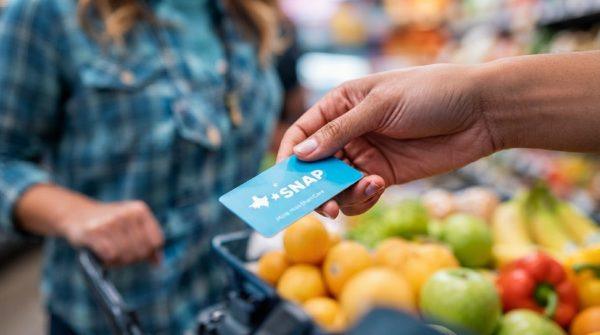
As of October 1, Texas has rolled out updated income limits and monthly benefit amounts for the Supplemental Nutrition Assistance Program (SNAP), commonly known as food stamps. The changes, implemented by the Texas Health and Human Services Commission, set new financial thresholds that determine who qualifies and how much assistance households can receive. For many Latino families across the state—from the colonias of the Rio Grande Valley to the barrios of Houston and San Antonio—these adjustments could mean the difference between putting food on the table or struggling to make ends meet.
New income limits: who qualifies now?
The updated rules establish three key income benchmarks: a gross income limit set at 130% of the federal poverty level, a net income threshold at 100%, and a categorical benchmark reaching 165% for certain situations. These figures are adjusted based on household size, ensuring that larger families have higher allowable earnings.
For example, a single-person household can now have a gross monthly income of up to $1,696 and still qualify. Two-person households see a limit of $2,292, three-person households $2,888, and four-person households $3,483. The scale continues upward: five-person homes can earn up to $4,079, six-person households $4,675, seven-person households $5,271, and eight-person households up to $5,867. Each additional member adds $596 to the gross income limit, $459 to the net income limit, and $757 to the 165% threshold.
These numbers reflect a broader effort to align assistance with the rising cost of living. As economic pressures mount, especially in border communities where many Latino families work in agriculture or service industries, the updated thresholds aim to provide a more accurate safety net.
Maximum monthly benefits: how much can you get?
While income limits determine eligibility, the actual benefit amount depends on a household's net income after deductions. The maximum monthly allotments have also been updated. A single person can receive up to $298, while a family of five can get up to $1,183. Six-person households are eligible for up to $1,421, seven-person households for $1,571, and eight-person households for $1,789. Each additional member adds $218 to the maximum benefit.
However, the final amount is rarely the maximum. To calculate your benefit, the state subtracts allowable deductions from your gross income to determine net income, then applies a percentage of that net income against the maximum benefit. Standard deductions have also been updated: $217 for households of one to three members, $229 for four members, $268 for five, and $308 for six or more.
Other deductions include a housing expense deduction (capped at over $769), a standard utility allowance of $464, a basic subsidy of $417, and a special deduction of $205.66 for homeless individuals. These deductions can significantly lower your countable income, potentially increasing your benefit amount.
Work requirements and purchase rules
Eligibility isn't just about income. Most adults aged 16 to 59 must meet general work requirements, such as actively seeking employment or participating in approved training programs. Additionally, adults aged 18 to 64 without children under 14 face the Able-Bodied Adults Without Dependents (ABAWD) rule, which limits benefits to three months in a three-year period unless they work or participate in work training for at least 20 hours per week.
These work rules have been a point of contention, especially among advocacy groups that argue they disproportionately affect Latino families. As new SNAP work rules put millions of Latino families at risk, it's crucial to understand how these requirements might impact your household.
Benefits are delivered via the Lone Star Card, which works like a debit card at authorized retailers. You can buy groceries such as fruits, vegetables, meats, poultry, fish, bread, cereals, milk, dairy products, and even seeds and plants to grow food. Online purchases are allowed at participating stores. However, SNAP funds cannot be used for alcohol, tobacco, non-food items, or prepared meals.
If you're unsure about your eligibility or benefit amount, the Texas Health and Human Services Commission encourages residents to review the official guidelines and keep accurate documentation. Changes in income, household size, or expenses must be reported promptly to avoid interruptions in benefits.
For many Latino families, SNAP is a vital lifeline. In Texas, where nearly 40% of the population identifies as Hispanic, these updates have a direct impact on communities from El Paso to the Gulf Coast. As the cost of groceries continues to climb, knowing your rights and benefits is more important than ever.
For more on how these changes affect other states, check out our coverage on California families risking summer food benefits. And if you're also navigating other assistance programs, you might be interested in the IRS Child Tax Credit and how it can supplement your household income.