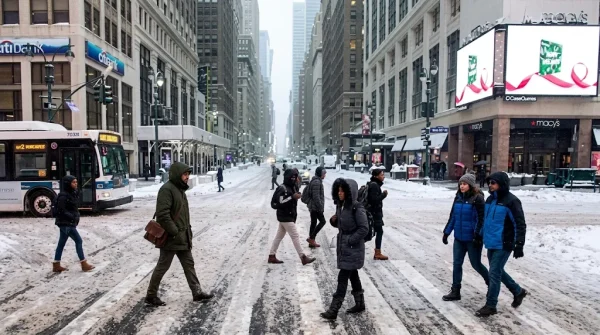
After a winter that pushed the city's infrastructure to its limits, New York City is overhauling its response to extreme cold. Mayor Zohran Mamdani and city officials have unveiled a $25 million plan aimed at safeguarding the most vulnerable New Yorkers, from unhoused residents to seniors, as temperatures drop.
The previous season saw 43.4 inches of snow—nearly double the annual average of 22.9 inches—and nine consecutive days of below-freezing temperatures. That strain exposed gaps in the city's emergency systems, prompting a comprehensive upgrade that will take effect in October 2026.
Expanded shelters and mobile care
At the heart of the plan is a significant expansion of emergency shelter capacity. The city will add eight specialized care centers, four new warming facilities, and 20 climate-controlled buses that can serve as mobile warming stations. These additions will secure 800 extra shelter beds, ensuring that no one is left without a warm place during prolonged cold snaps.
To reach people where they are, more than 300 additional outreach workers will canvas parks, subway stations, and street corners. Up to 55 WARM mobile units, equipped with nurses, will provide on-site medical evaluations and transport individuals to safe facilities. The city has also designated at least three hospitals as emergency warming centers, with the capacity to open all 11 NYC Health + Hospitals facilities during severe crises.
These efforts are part of a broader push to strengthen Code Blue protocols, which activate during extreme cold events. Health workers will deploy to deliver immediate care and coordinate responses across communities, prioritizing those at highest risk.
Snow removal gets a boost
The Department of Sanitation (DSNY) is also upgrading its fleet to keep streets clear. More than 2,200 plow-convertible vehicles, 700 salt spreaders, and 47 specialized machines for protected bike lanes will be deployed. Additionally, 120 compact snowplows will tackle street corners, access ramps, and bus stops, while about 3,000 per diem workers will assist with manual snow removal at $30 per hour.
Clearing mandates now formally include bus stops, pedestrian crosswalks, and sidewalk corners, ensuring that seniors, people with mobility challenges, and commuters can navigate safely. The city will also clear 47 protected bike routes to support year-round micro-mobility.
These upgrades come as forecasters predict a warmer and wetter winter, influenced by a strong El Niño. While that might suggest less snow, the city is preparing for the unexpected, knowing that even a single storm can overwhelm systems.
For residents, the message is clear: the city is investing in resilience. As winter heating aid applications open, New Yorkers are encouraged to take advantage of available resources. The city's commitment to protecting its most vulnerable is a reminder that extreme cold is not just a weather event—it's a public health priority.
With these measures, New York is setting a new standard for urban cold-weather response, one that other cities with large Latino communities, like Chicago or Boston, might look to as a model. The focus on outreach, mobile care, and infrastructure reflects a deeper understanding that extreme weather hits marginalized groups hardest—a lesson that resonates across the Americas.