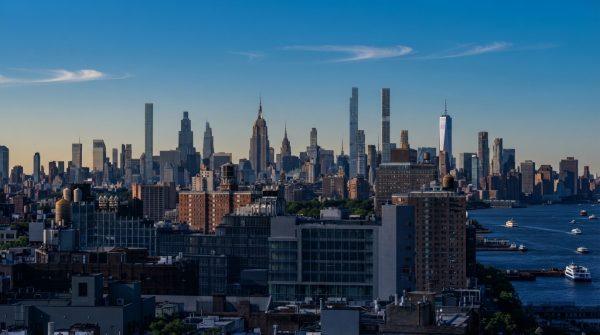
This summer, a Legionnaires' disease outbreak in Manhattan put a spotlight on a hidden risk lurking atop thousands of buildings across New York City. By August 31, the city had recorded 94 cases and 11 deaths, prompting urgent action from municipal authorities. Now, Mayor Zohran Mamdani and health officials are rolling out a new digital tool—a public map of every cooling tower in the five boroughs—to help residents stay informed and to enforce stricter safety rules.
The outbreak, which originated in the dense commercial corridors of Manhattan, exposed how easily the Legionella bacteria can spread through the mist of air-conditioning systems and cooling towers. These structures, often overlooked, become breeding grounds when not properly maintained. For many Latino families living and working in neighborhoods like Washington Heights or the Bronx, where older buildings and busy commercial districts are common, this is a reminder that public health is tied to the infrastructure around us.
A new map for a safer city
Starting in spring 2027, the city will launch an interactive platform that lets anyone look up the location of cooling towers near their home or workplace, along with their inspection status. The Department of Health and the Department of Buildings are also cross-referencing their databases to find unregistered towers that have been operating without oversight. Owners who skip mandatory tests or fail to register their equipment will face significant fines.
This initiative is part of a broader push to modernize how the city tracks and prevents outbreaks. As community-driven efforts in Upper Manhattan have shown, local engagement is key to public health. The new map aims to give residents the same power—to know what's in their air and to hold building owners accountable.
Stricter rules and enforcement
The city has already implemented a mandatory monthly sampling schedule for all commercial cooling towers. Property managers must submit certified disinfection reports if live bacteria are detected. Inspectors are conducting surprise visits to rooftops to check that systems are clean and well-maintained. According to the NYC Department of Health and Mental Hygiene, compliance with monthly sampling reached 81% by the end of August—a number officials hope to push higher.
But enforcement is only part of the story. The city is also investing in faster lab tests that can confirm the presence of Legionella within hours, allowing for immediate chemical cleaning of affected systems. This rapid response is crucial to preventing further spread, especially in high-density neighborhoods where a single contaminated tower can affect hundreds of people.
For building owners, especially those managing smaller properties in Latino communities, the new rules may feel burdensome. But city officials stress that the cost of prevention is far lower than the cost of an outbreak. As one health department spokesperson put it, “A few dollars for a test is nothing compared to the price of a life.”
Long-term oversight and community trust
The summer outbreak has also sparked a broader conversation about urban infrastructure and public health. Similar cities across the U.S. are watching New York's response closely, and some may adopt similar models. The Environmental Protection Agency has supported research into better cooling tower management, and New York's approach could become a template.
For now, the city is increasing funding for epidemiological research and digital tools to track and prevent future outbreaks. The new map, set to launch in 2027, is a step toward transparency. But officials say the real work is ongoing—ensuring that every tower is registered, tested, and cleaned on schedule.
As the city moves forward, the memory of those 11 deaths remains a sobering reminder. For Latino New Yorkers, many of whom work in hospitality, retail, and other industries that rely on air-conditioned spaces, this issue hits close to home. Staying informed and advocating for safe buildings is not just a matter of comfort—it's a matter of health and dignity.
For more on how public health issues affect our communities, check out our coverage of recent measles outbreaks and the FDA's investigation into salmonella. And if you're concerned about scams that target families, read about the latest DMV text scam.