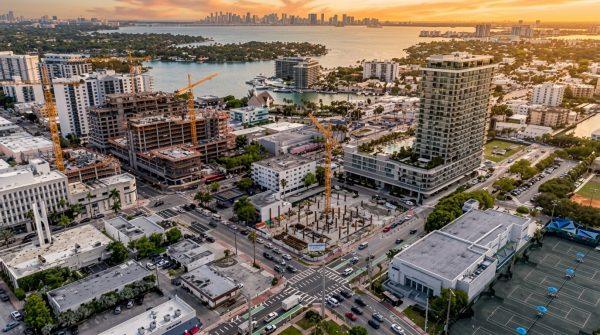
In a significant victory for historic preservation advocates, Miami Beach developer Russell Galbut has officially withdrawn his applications to build three skyscrapers in the city's coastal neighborhoods. The decision comes after months of heated public hearings and mounting opposition from residents, elected officials, and preservation groups who argued that the towers would irreparably alter the character of the city.
Galbut, co-founder of Crescent Heights and founder of GFO Investments, confirmed the withdrawal in an email to City Manager Eric Carpenter. The proposed projects included a 519-foot tower at 1575 Alton Road, a 383-foot tower at 740 Alton Road, and a 225-foot tower at 880 71st Street. The plans were filed under Florida's Live Local Act, a 2023 state law that allows developers to bypass local zoning rules if they reserve 40% of units for affordable housing for 30 years.
Community activists and neighborhood associations rallied against the projects, arguing that the state's density exemptions threatened the historic scale of areas like South Beach, known worldwide for its Art Deco architecture. Meg Lousteau, executive director of the Miami Design Preservation League, told the city commission that the Live Local Act was "approaching like a freight train," emphasizing that the city's historic buildings are its essential brand and lifestyle.
Miami Beach Commissioner Alex Fernández, who had been a vocal critic of the proposals, welcomed the withdrawal. In a social media post, Fernández said he expects to resolve future applications through constructive dialogue with any real estate developer operating in the district. However, Commissioner David Suárez offered a different interpretation, crediting the city's decision to hire outside counsel to audit the 519-foot height benchmark set by the Five Park tower near the MacArthur Causeway. Suárez argued that developers backed down once officials began pushing back with independent legal reviews and the threat of litigation.
Legal resistance and coalition building
The city commission unanimously approved hiring external legal counsel to investigate past zoning precedents and coordinate joint legal actions with the city of Miami. Mayor Steven Meiner has also spearheaded a statewide coalition of municipal leaders lobbying state lawmakers to amend or repeal the Live Local Act. Meiner noted that several legislators who originally supported the law now express regret, creating what he called a "perfect storm" in favor of local governments.
Galbut, for his part, emphasized his desire for public-private collaboration and paused the proposals after constructive discussions with Fernández and Miami-Dade County Commissioner Vicki López. He declined to specify future plans under the legislation.
The controversy highlights a broader tension in Florida between state-level housing policies aimed at addressing affordability and local control over land use. For Miami Beach, a city that relies heavily on tourism drawn by its unique architectural heritage, the stakes are particularly high. The withdrawal of these applications marks a rare win for local advocates in a state where preemption laws have increasingly limited municipal authority.
As the city prepares for potential legal battles, officials have pledged to maintain strict oversight over every commercial building proposal to ensure that any future plans align with community standards. The outcome of this dispute could set a precedent for other Florida cities grappling with similar challenges.
For now, the skyline of Miami Beach remains unchanged, and the city's Art Deco treasures stand a little safer. But the debate over how to balance growth, affordability, and preservation is far from over. As one local activist put it, "This is not just about three buildings; it's about the soul of our community."