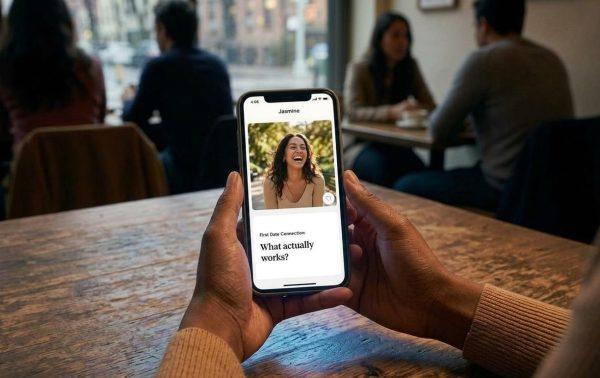
For millions of Latinos across the U.S., dating apps like Tinder and Hinge are a familiar way to meet people—whether in Miami, Los Angeles, or Chicago. But behind the swipe-and-match interface lies a growing crisis that goes far beyond the search for a perfect match. Federal investigations have revealed that these platforms have become fertile ground for sophisticated financial scams, with losses reaching staggering heights.
Senate scrutiny and the cost of inaction
In 2026, Tinder and Hinge are under intense congressional scrutiny. Senators Maggie Hassan (D-NH) and Marsha Blackburn (R-TN) have led a bipartisan investigation into Match Group, the parent company of Tinder, Hinge, Match, and Plenty of Fish. After a year of requests, Match Group handed over 670 pages of internal documents to the Senate's Joint Economic Committee. The findings are alarming: these apps have become primary channels for organized digital crime, particularly romance scams.
The Federal Trade Commission estimates that Americans lost over $1.5 billion to romance scams in 2025—a 650% increase from 2019. The problem is not just about fake profiles; it's about a systemic failure to protect vulnerable users. As one Senate report notes, the issue extends beyond matching algorithms to the very core of platform security.
Outdated AI and algorithmic bias
Internal documents reveal that Tinder and Hinge's AI models designed to block fake profiles have not been updated for years. An AI security expert told the Senate that platforms facing permanent fraud should retrain their systems at least monthly. Yet, these models remain stagnant, allowing scammers to exploit vulnerabilities with ease.
Even more troubling, the algorithms appear biased toward showing scammer profiles more often than legitimate ones. Between May 2024 and December 2025, scammer profile views surged by over 700% globally. In the first three quarters of 2025, nearly 500,000 out of 1.5 million fraudulent accounts that matched with users in the U.S. advanced to exchanging contact information, moving conversations to external channels where platforms can no longer intervene.
This isn't just a technical glitch—it's a human tragedy. Mary, a Plenty of Fish user, lost nearly $100,000 in cryptocurrency over two months after being manipulated with fabricated emergencies. Sue Nuss, a 77-year-old widow from Pennsylvania, lost over $700,000 after connecting with a fake profile on Tinder. These stories highlight how loneliness and aging are exploited with precision, a reality that resonates deeply in many Latino communities where family ties and trust are central.
Match Group's response and new legislation
In response to the backlash, Match Group has implemented new measures, including 169 automated rules, 108 improvements, and a mandatory biometric video verification called Face Check for new users. Yoel Roth, senior vice president of trust and safety, defended the company's efforts, stating, "We have achieved the greatest safety advances in company history." However, a YouTube video from April 2026 showed that Face Check can be bypassed, and a spokesperson acknowledged the vulnerability to Mashable.
Meanwhile, Congress is pushing back. The Senate unanimously passed the Romance Scam Prevention Act, a bill aimed at holding platforms accountable for negligence. Senator Hassan acknowledged that while the act will reduce scammer matches, technological gaps remain, especially as scammers increasingly use AI to create more convincing fake personas.
For Latinos, who are among the fastest-growing demographics on dating apps, this crisis is personal. Many have family members who are recent immigrants or older adults, groups that are particularly vulnerable to these scams. As the digital landscape evolves, so must the protections. The question is whether Match Group will truly prioritize safety over profit, or whether this is just another chapter in a story of corporate negligence.
As we navigate this new era of digital romance, it's crucial to stay informed and cautious. For more on how technology is reshaping relationships, check out our piece on Black women's experiences in dating and the broader Venezuelan migration reshaping U.S. communities. The fight for safer dating apps is far from over, but awareness is the first step toward change.