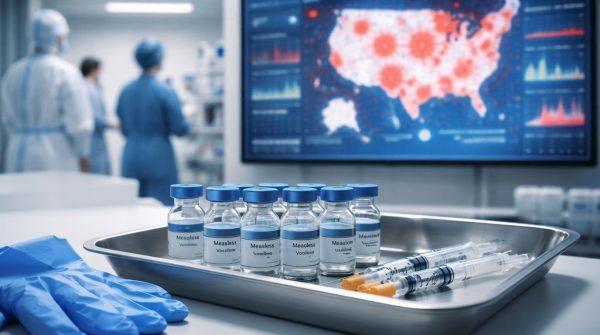
The United States is in the grip of its most severe measles outbreak in over three decades, and the financial toll is staggering. As of August 20, 2026, the Centers for Disease Control and Prevention (CDC) has confirmed 2,777 cases nationwide—the highest number since 1991. This surge is not just a public health crisis; it's an economic one, with each patient costing an average of $43,204 in direct medical expenses, according to a study published in the journal Vaccine.
When you factor in state-level response operations, the cost per case can climb to nearly $58,000. With outbreaks reported in 47 states, the cumulative impact is threatening the stability of local health budgets. The study, which analyzed 19 scientific studies and eight additional reports covering 18 states from 2000 to 2025, found that even small outbreaks require costly logistical mobilization. Last year alone, 2,289 infections generated an economic impact of $134 million, including containment efforts.
The hidden costs of measles
But the financial burden extends far beyond hospital bills. Families face mandatory isolation, prolonged absences from work and school, and the emotional strain of caring for a sick loved one. These indirect costs add up quickly, especially in communities where the virus spreads rapidly. According to health officials, 94% of this year's cases are linked to specific hotspots, forcing institutions to conduct exhaustive contact tracing and implement strict sanitary cordons—all of which divert resources from other essential public health programs.
The economic calculations are based only on documented cases, meaning the true cost is likely higher. Unreported infections and the long-term complications of measles, such as pneumonia and encephalitis, remain unaccounted for. This highlights the vulnerability of public health systems when herd immunity drops below critical levels.
For Latino communities, who often face barriers to healthcare access and higher rates of vaccine hesitancy, the outbreak poses a particular threat. In cities like Los Angeles, Houston, and Miami, where large Latino populations reside, health departments are working overtime to reach families with accurate information and vaccination clinics. The reopening of schools has added urgency, as unvaccinated children are at highest risk.
Prevention is the only sustainable solution
Health experts emphasize that the MMR vaccine—which protects against measles, mumps, and rubella—is 93% effective with a single dose and 97% with the full series. When vaccination rates fall below 95%, the virus finds enough susceptible individuals to sustain transmission chains that are costly and difficult to break.
“The measles vaccine is one of the most effective tools we have in public health,” says Dr. Elena Rodríguez, an epidemiologist at the University of Texas. “Every dollar spent on immunization saves many more in outbreak response and healthcare costs.”
Federal agencies are urging states to maintain high vaccination coverage to prevent hospitals from being overwhelmed. Continuous education for parents and early investment in preventive care are the only truly effective ways to turn emergency budgets into a permanent shield against the virus. As the nation battles multiple outbreaks, from measles to cyclospora and drug-resistant fungi, the need for robust public health infrastructure has never been clearer.
For families, the message is simple: get vaccinated, stay informed, and protect your community. The cost of inaction is far greater than the price of a vaccine.