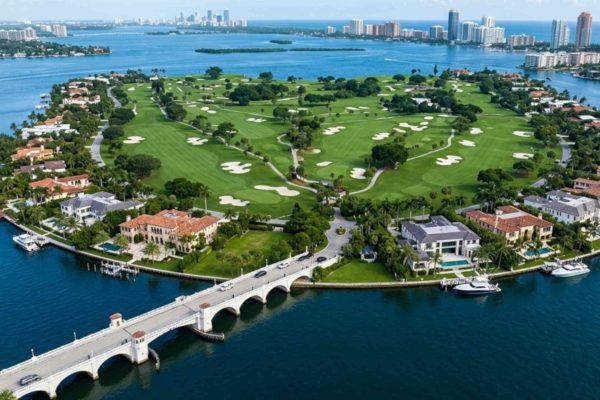
In the heart of Miami-Dade County, a tiny island community has become the unlikely face of immigration enforcement. Indian Creek Village, often called the Billionaire Bunker for its roster of ultra-wealthy residents, has quietly trained its entire police force under a federal agreement with U.S. Immigration and Customs Enforcement (ICE). The move aligns the enclave with state laws that ban sanctuary city policies, but so far, it has produced no arrests and no federal dollars.
A fortress with a political message
Indian Creek Village sits on a barrier island connected to the mainland by a single bridge, a natural chokepoint that makes it one of the most secure residential areas in the country. The community is home to billionaires like Jeff Bezos, as well as political figures such as Ivanka Trump and Jared Kushner. Its police department, though small, has completed ICE training under the 287(g) program, which allows local officers to enforce federal immigration law.
But the program's impact has been minimal. According to municipal records, no arrests have been made under the agreement, and the village has not received any federal reimbursement for the training. The move appears to be more about signaling compliance with state and federal directives than about addressing a real public safety need. After all, the village has reported zero crimes to the FBI for over a decade.
This paradox hasn't gone unnoticed. While cities like Miami proper have debated their stance on immigration cooperation, Indian Creek Village has embraced it wholeheartedly. The decision reflects a broader trend in South Florida, where some of the most affluent communities are aligning themselves with hardline immigration policies, even when their own crime rates are virtually nonexistent.
Symbolism over substance
For residents of Indian Creek Village, the ICE partnership is a statement of values. It signals that this exclusive enclave stands with state leaders who have pushed for stricter immigration enforcement. But critics argue that it's a hollow gesture, given that the village's police force has no documented immigration-related arrests and the community's isolation makes it an unlikely target for undocumented immigration.
"This is about optics, not public safety," said a local immigration attorney who asked not to be named. "The Billionaire Bunker doesn't have an immigration problem. It has a PR problem, and this is their way of showing loyalty to the party line."
The village's approach contrasts sharply with other parts of Miami, where crackdowns on Airbnb chaos and other quality-of-life issues take priority. Meanwhile, the broader Latino community in Miami-Dade has mixed feelings about immigration enforcement, with many residents supporting legal pathways but opposing mass deportations.
Luxury and law enforcement
Indian Creek Village's police force is well-funded, thanks to the property taxes of its ultra-wealthy residents. The village can afford specialized training and equipment that many municipal departments can only dream of. Yet, the ICE agreement has not translated into tangible results, raising questions about the effectiveness of such partnerships in low-crime areas.
"It's a strange use of resources," said a former Miami-Dade police officer. "You have a community with no crime, and they're spending time on immigration enforcement. It doesn't add up, unless the goal is purely political."
The village's stance also highlights the growing divide between affluent enclaves and working-class neighborhoods, where immigration enforcement can have real consequences. For many Latino families in Miami, the threat of deportation is a daily reality, but in Indian Creek Village, it's a theoretical exercise.
As the debate over immigration continues to shape Florida politics, Indian Creek Village's decision stands out as a curious case study. It's a community that has everything—money, security, and influence—yet feels compelled to prove its patriotism through immigration enforcement. Whether that changes remains to be seen, but for now, the Billionaire Bunker is a symbol of how immigration policy can be used as a political tool, even where it's least needed.
For more on Miami's evolving landscape, check out our coverage of sinking luxury towers and the Latin Billboard Awards coming to the city.