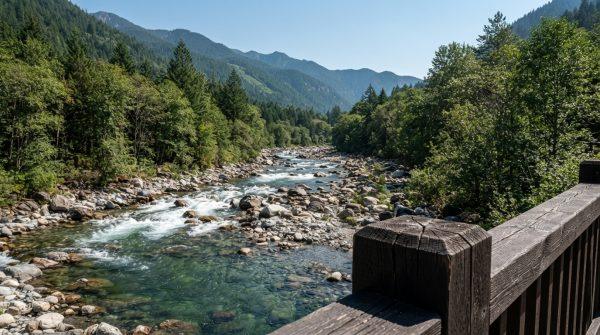
The Scott River, a vital tributary of the Klamath in Northern California, is turning to dust just as chinook and coho salmon return to spawn. The crisis has ignited a fierce debate over water rights, pitting agricultural producers against indigenous tribes and state regulators.
Record-low snowpack—just 1% of average on May 1—has left the river with little to sustain it through the dry season. The State Water Resources Control Board has issued emergency curtailment orders, directing farmers to halt surface diversions and cut consumption by 30%. But growers argue that such measures ignore the broader climate reality.
“No matter how much you regulate the agricultural community and take away their water, you are not going to make the river flow properly in a year like this,” said Brandon Fawaz, a valley producer, reflecting the frustration of many in the region.
A river on the brink
The Scott River, along with the neighboring Shasta River, is among the most heavily regulated waterways in California due to its critical role for salmon. The emergency rules follow Governor Gavin Newsom’s 2021 drought declaration and a state law extending regulatory powers through 2031 while permanent rules are developed.
Environmental groups, including the Environmental Protection Information Center (EPIC), have been monitoring the river’s decline. They criticize regulators for not acting fast enough to curb excessive agricultural pumping, which they say depletes groundwater and reduces surface flows over time.
“Surface diversions impact flows immediately, but groundwater pumping effects can take months to materialize,” explained Erik Ekdahl, deputy director at the State Water Resources Control Board. “This river has the capacity to dry up entirely even under minimal diversion scenarios.”
Tribes demand permanent protections
Indigenous tribes, including the Quartz Valley Indian Reservation, are calling for permanent management programs to safeguard minimum streamflows. Leonard Lincoln, president of the Quartz Valley Indian Reservation, joined environmental leaders in signing a formal letter demanding stricter regulatory review.
“The health of the river reflects the health of our people, and the Scott cannot continue to serve as a vital salmon nursery without fresh, clean water,” Lincoln declared.
The stakes are high: after the historic removal of four Klamath River dams in 2024—the largest dam removal project in U.S. history—salmon have returned to spawn across 88% of their historical range. But the Scott River’s dry stretches block fish passage upstream, concentrating populations in lower reaches and increasing disease risks.
Farmers propose alternatives like aquifer recharge projects and controlled forest burns on U.S. Forest Service lands, but environmental watchdogs argue that mandatory cutbacks in agricultural groundwater use are essential to protect fish habitats.
As the crisis deepens, the Scott River has become a flashpoint for California’s water future. The outcome will shape not only the fate of salmon but also the livelihoods of those who depend on the river. For now, the river’s health hangs in the balance, and the clock is ticking.