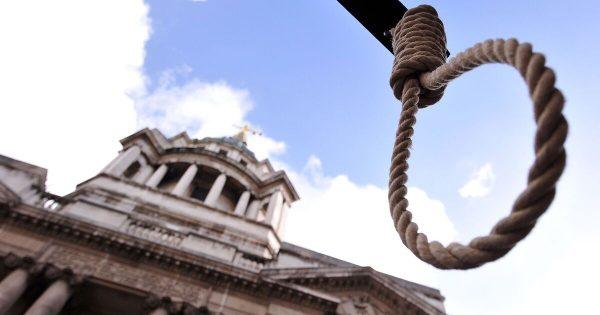
In the summer of 1936, the small river town of Owensboro, Kentucky, became the stage for a grim spectacle that would forever mark American justice. Rainey Bethea, a 22-year-old Black laborer, was hanged before a crowd of 20,000 people, an event that remains the last public execution in the United States. The chaos and revulsion that followed prompted a wave of legislative bans, reshaping how the nation administers the death penalty.
Now, nearly nine decades later, the echoes of that day are reverberating again. The Pentagon's recent decision to livestream the execution of Nidal Hasan, the former Army psychiatrist convicted for the 2009 Fort Hood shooting, has reignited debates about state-sponsored violence as public entertainment. Vice President JD Vance has publicly stated he will not watch the December 3 broadcast, a rare moment of bipartisan discomfort that underscores the enduring sensitivity of the issue.
The crime and the trial
Bethea's story began in Roanoke, Virginia, where he was orphaned at a young age. By 1936, he was living in Owensboro, working as a laborer. In the early hours of June 7, he broke into the home of 70-year-old Lischia Edwards, assaulting, strangling, and robbing her of jewelry. A prisoner's ring left at the scene sealed his fate. The jury deliberated for just four and a half minutes before convicting him, with his court-appointed attorney offering no defense. Governor Albert B. “Happy” Chandler signed the death warrant, and Bethea's grave would remain unmarked.
The case drew national attention not because of the crime, but because of the woman tasked with carrying out the sentence. Florence Thompson, the Daviess County sheriff, had assumed office just four months earlier after her husband's sudden death from pneumonia. Reporters from Chicago and New York flocked to witness a woman direct an execution, a novelty that overshadowed the condemned man's fate.
The day of the hanging
On August 14, 1936, Thompson declined to spring the trap herself, delegating the task to Arthur Hash, a retired Louisville police officer who arrived intoxicated and demanded anonymity. At 5:32 a.m., Bethea plummeted through the trapdoor before thousands of spectators gathered along the riverbank. Physicians pronounced him dead 13 minutes later. The atmosphere was carnival-like, with vendors selling souvenirs and local establishments packed with revelers. A 36-year-old visitor was killed in a vehicular accident amid the chaos.
Thompson later confessed she would spend the rest of her life trying to forget the scene, a memory she carried until her death in 1961. Her son James recalled her anguish, while author Sonya Lea, in a BBC interview, revealed that her grandparents, newlywed teenagers near the gallows, suffered lasting trauma after hearing Bethea's neck snap. Lea described the event as a “legal lynching.”
Legal aftermath and a national shift
The Owensboro debacle prompted Kentucky to ban public hangings in 1938, and the following year, the state formally ended the practice. Nationally, only a minor semipublic hanging occurred in Missouri in 1937. Michael Radelet, professor emeritus at the University of Colorado Boulder, told NPR that authorities eliminated visible executions because they lost their deterrent effect and triggered public revulsion, drawing a parallel to the abolition of the guillotine in France.
Since then, capital punishment has been confined to secure facilities. The 2001 execution of Oklahoma City bomber Timothy McVeigh was broadcast via closed-circuit television to 232 victims' relatives in a designated room. Robin Maher, executive director of the Death Penalty Information Center, notes that no regulations exist for open broadcasts in the United States, warning that mass governmental spectacles typically characterize authoritarian regimes.
The debate over public executions is not merely historical. As the Pentagon's livestream plan unfolds, it raises questions about transparency, justice, and the line between accountability and spectacle. For Latinos and all Americans, the lessons of Owensboro remain relevant: the pursuit of justice must never become a public circus. The memory of Rainey Bethea, a man whose life was cut short in a moment of national shame, serves as a cautionary tale for a country still grappling with the ethics of state-sanctioned death.
Related: bilingual workers' earning potential and Arizona's border land closure.