As classrooms across the United States welcome students for the 2025–2026 school year, public health officials are grappling with a troubling milestone: measles cases have reached their highest level in 35 years. According to the Centers for Disease Control and Prevention (CDC), there have been 2,777 confirmed cases nationwide as of August 20, 2026—a number that has not been seen since the early 1990s.
The surge comes as vaccination rates among kindergarteners have dipped to 92.4% for the MMR vaccine, which protects against measles, mumps, and rubella. That figure falls short of the 95% threshold needed to maintain herd immunity, leaving communities vulnerable to outbreaks. Health experts attribute the decline to a rise in school vaccination exemptions, both medical and non-medical, which have increased from 3.6% to 4.2% nationally.
Why measles spreads so easily
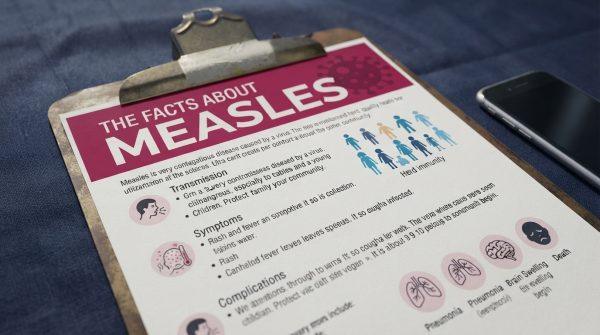
Measles is among the most contagious viruses known. Up to 90% of unvaccinated people who come into contact with the virus will become infected. The disease spreads through respiratory droplets and can linger in the air for up to two hours after an infected person leaves a room. Early symptoms include high fever, cough, runny nose, and red, watery eyes, followed by the telltale rash that spreads across the body.
For Latino families, many of whom have roots in countries where measles remains a serious threat, the stakes are especially high. In México, for example, vaccination campaigns have been a public health priority, but travel and migration can create gaps in coverage. The CDC and local health departments are urging parents to review their children's immunization records before the school year begins.
“The vaccine is safe, effective, and the best defense we have,” says Dr. María Elena Pérez, a pediatrician in Houston. “A single dose provides about 93% protection, but the second dose, given between ages 4 and 6, boosts that to 97% and ensures long-lasting immunity.”
Exemptions on the rise
Across the country, 24 states have reported that more than 5% of kindergarteners have at least one vaccine exemption. This trend is particularly concerning in states with large Latino populations, such as Texas, California, and Florida, where school districts are working to balance parental choice with public health needs.
Administrative exemptions—those granted for non-medical reasons—have become a focal point of debate. While some parents cite religious or philosophical objections, health officials emphasize that exemptions can apply to different vaccines, meaning a child may be exempt from one but still protected against measles. Still, the overall rise in exemptions reflects a broader decline in vaccine acceptance that worries epidemiologists.
“We’re seeing a perfect storm: lower vaccination rates, higher exemption numbers, and a highly contagious virus,” says Dr. James Carter, an epidemiologist at the University of Miami. “The result is that measles is finding pockets of susceptible children, and it’s spreading quickly.”
What parents should do
Health authorities recommend that parents check their children’s vaccination records to ensure they have received both doses of the MMR vaccine. The first dose is typically given between 12 and 15 months of age, and the second between 4 and 6 years. If a child is over 12 months and has not been vaccinated, the CDC advises getting the first dose immediately, with the second dose at least 28 days later.
For families with questions, pediatricians are the best resource. They can provide personalized advice based on a child’s age, health history, and local outbreak conditions. Schools and public health departments are also updating their databases to identify students who may be missing required documentation.
“We’re urging parents to act now, before the school year is in full swing,” says Dr. Pérez. “It’s a simple step that can prevent a lot of suffering.”
The current outbreak is a stark reminder of the importance of vaccination. Before the measles vaccine was introduced in 1963, an estimated 3 to 4 million people in the U.S. got measles each year, and about 500 died. Today, thanks to widespread immunization, measles was declared eliminated in the U.S. in 2000. But that status is now at risk.
As students head back to class, the responsibility falls on families, schools, and communities to protect the most vulnerable. For Latino families, who have deep ties to regions where measles is still a threat, ensuring vaccination is not just a personal choice—it’s a way to safeguard the health of the entire community.
For more on how schools are handling health challenges, check out our coverage of the Ten Commandments classroom law and Florida's dengue outbreak.