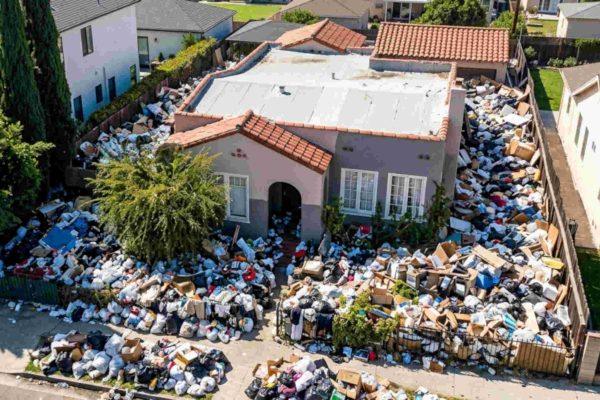
Just weeks after Los Angeles officials declared a public health emergency and spent millions to clear out a Fairfax district home that had been accumulating garbage for fifteen years, the property is once again buried under mounds of waste. The owner, 72-year-old Raymond Gaon, has reportedly started piling up bags, bottles, and clothing again, with piles now reaching nearly three feet high in the yard. The swift return of the mess has left neighbors and city officials stunned, turning what seemed like a decisive victory into a frustrating repeat of a long-running urban saga.
A costly cleanup that didn't stick
In late 2025, Mayor Karen Bass declared a public health emergency, allowing crews to bring in heavy machinery, close off the street for several days, and haul away tons of debris that had accumulated over more than a decade. The operation was hailed as a major step toward resolving a nuisance that had plagued the upscale neighborhood for years. But within weeks, Gaon was back at it, collecting items from curbside bins and adding to the pile on his property. The city's cleanup, which cost taxpayers millions, has proven to be a temporary fix at best.
Residents describe a scene of persistent odors and an explosion of pests, particularly cockroaches, which have begun appearing in nearby kitchens. Some families are so distressed that they are considering moving out of the area. The constant presence of trash has also raised fears about declining property values in a neighborhood where renovated mansions sit alongside Gaon's deteriorating home. One neighbor, who asked to remain anonymous, said, "We've lived here for years, but this is becoming unbearable. We can't even open our windows without the smell and the bugs."
Gaon, who some friends describe as a recycler trying to make a living and maintain his garden's ecosystem, patrols the streets as early as 6 a.m. with a headlamp, collecting items from other people's trash cans. His supporters argue that he is simply trying to earn a modest income, but the impact on the community is undeniable.
Legal battles and a possible conservatorship
In response to the recurring problem, California courts are now seriously considering appointing a conservator to take administrative control of Gaon's property. This legal mechanism would allow a third party to manage the property and ensure it remains clean, without treating Gaon as a criminal. The property, which is valued at around $1.3 million, would be protected from further deterioration while also safeguarding the health and safety of the neighborhood.
Meanwhile, the mayor's office is pursuing criminal action against Gaon, arguing that his repeated violations of public health codes warrant legal consequences. The case highlights the challenges cities face when dealing with extreme hoarding situations, where the root cause of the problem often goes beyond simple cleanup.
This episode is not the first time Los Angeles has grappled with such issues. The city has seen other high-profile hoarding cases, and the recent spike in rabid bat cases has added to public health concerns. The situation in Fairfax also echoes broader urban challenges, such as the illegal wildlife trade that has found a foothold in the city, underscoring the need for more comprehensive municipal oversight.
For now, the future of Gaon's property remains uncertain. The legal proceedings could set a precedent for how Los Angeles handles similar cases, balancing the rights of property owners with the well-being of the community. As one city official put it, "We can't just keep cleaning up the mess. We need to find a permanent solution that addresses the underlying issues."
In the meantime, neighbors are left to wonder how long they will have to endure the smell, the pests, and the constant reminder that sometimes, even a multi-million dollar cleanup isn't enough to solve a problem that has been building for years.