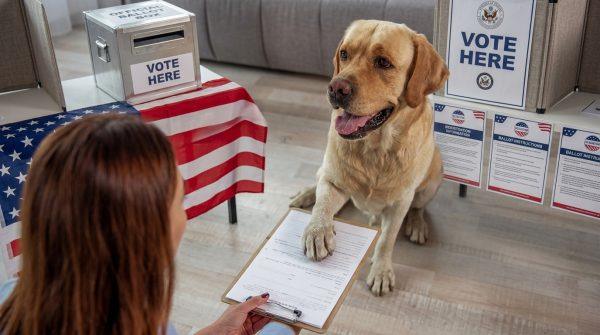
In Costa Mesa, California, a dog named Maya Jean technically cast a ballot in the 2021 gubernatorial recall election. The vote was counted, and the incident became a legal case that ended with the dog's owner, Laura Lee Yourex, paying $1,500 to fund public awareness ads featuring Maya Jean's picture. Yourex pleaded guilty to a misdemeanor charge of fraudulent enrollment in April 2026, and prosecutors dismissed the case on October 15 after she fulfilled her plea conditions.
Yourex said she registered her dog to "expose flaws in our state voting system, intending to improve it by demonstrating that even a dog can be registered to vote." Her attorney noted that she self-reported the matter to the Orange County Registrar of Voters, hoping to prompt an investigation and ultimately improve the registration system. The dog's vote was counted in 2021 but rejected in 2022 due to missing documentation.
The case highlights how individual actions can exploit system weaknesses, but it also underscores a broader issue: administrative errors and software glitches can affect thousands of legitimate voters. In New Jersey, Governor Mikie Sherrill revealed in July 2026 that a software flaw in the state's voter system improperly enrolled roughly 6,600 noncitizens through Motor Vehicle Commission transactions between 2023 and 2024. The automated motor voter platform, designed to streamline signups during driver license renewals, failed to capture opt-out selections from noncitizen applicants. However, preliminary reviews indicated that fewer than 400 of those individuals actually cast ballots.
Governor Sherrill ordered immediate investigations, corrected affected records, and replaced the software vendor. She emphasized that improper registration does not equal deliberate fraud or unlawful voting. This distinction is crucial, as election officials across the country face pressure to ensure accuracy without disenfranchising eligible voters.
Lessons from Iowa and California
Statewide audits in Iowa provide a useful example. In October 2024, an initial screening flagged 2,180 potential noncitizen voters. But after thorough cross-referencing with federal SAVE database checks, the confirmed number dropped to just 277. Of those, 35 individuals cast counted ballots in 2024, while officials rejected five voting attempts. This demonstrates that initial data often includes records predating naturalization, and that careful verification is essential before making public claims.
In California, the dog voting case led to a court settlement that funded four billboards along the 55 and 22 freeways, featuring Maya Jean with an "I Voted" sticker and a ballot, warning against voter fraud. The case also sparked a federal lawsuit: on October 15, 2026, the Department of Justice sued California to block mail ballots for 20,000 questioned voters, as reported by the Associated Press.
These incidents raise important questions about election security and the balance between preventing fraud and protecting voting rights. For Latino communities, who are often targets of voter suppression efforts, it's vital that systems are accurate but also accessible. The glitches in New Jersey and the dog vote in California are reminders that technology must be designed with care, and that human oversight remains essential.
As election directors analyze these technical glitches, they can distinguish isolated human oversights from unverified claims about widespread electoral vulnerabilities. The goal is to ensure that every legitimate vote counts, and that no one is wrongly excluded from the democratic process.