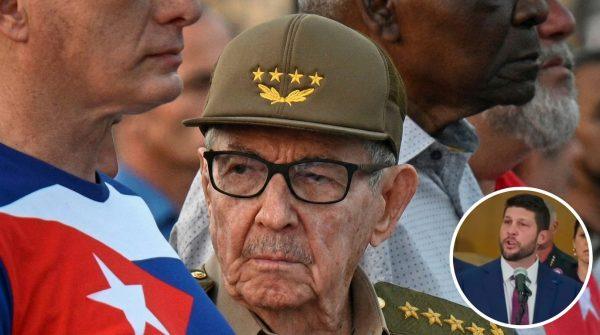
Nearly three decades after two unarmed civilian planes were shot down over international waters, Florida prosecutors are taking an unprecedented legal step against the man they say gave the order. On October 19, 2026, state officials announced an arrest warrant for Raúl Castro, the 95-year-old former president of Cuba, charging him with conspiracy to commit first-degree murder in the deaths of four men aboard the Brothers to the Rescue aircraft on February 24, 1996.
The warrant, signed by Chief Circuit Judge Ariana Fajardo Orshan, was unveiled during a press conference at Florida International University. Florida Attorney General James Uthmeier confirmed that a state grand jury indicted Castro for his role in the attack, which killed Carlos Costa, Pablo Morales, Mario de la Peña, and Armando Alejandre Jr. The men were flying in a humanitarian mission when Cuban MiG fighter jets fired missiles, destroying both planes.
“If by any reason he ends up in a friendly country with extradition agreements, then he will end up right here,” Uthmeier said, making clear that the state intends to pursue Castro wherever international law allows.
How Florida built its case
The state charges rest on a legal doctrine known as dual sovereignty, which permits separate federal and state prosecutions for the same conduct without violating constitutional protections against double jeopardy. This means that even if a future presidential pardon were to erase federal convictions, the state case would remain intact. That’s a crucial safeguard for families who have waited decades for accountability.
State investigators relied on evidence gathered by the FBI and federal prosecutors, who had already filed a seven-count superseding indictment against Castro and five Cuban military pilots. But the state’s case goes further, drawing on a seven-page affidavit from FDLE Special Agent Jorge González that details how Cuban intelligence operatives infiltrated Brothers to the Rescue through what prosecutors call Operation Scorpion. According to the affidavit, spies like René González and Juan Pablo Roque gathered flight patterns and even avoided flying on the day of the attack to ensure maximum casualties.
Prosecutors also point to recorded statements from June 21, 1996, in which Castro allegedly admitted authorizing military commanders to shoot down civilian aircraft without seeking higher approval. That admission, they argue, establishes direct responsibility and removes any doubt about his command authority.
A timeline of the attack
Brothers to the Rescue, a Miami-based humanitarian group, had been flying missions to drop leaflets and search for Cuban rafters in the Florida Straits. On that February afternoon, three planes took off from Opa-locka Airport. At around 3:21 p.m., a Cuban MiG fired an air-to-air missile at the first plane, killing Costa and Morales. Seven minutes later, a second missile struck the aircraft carrying de la Peña and Alejandre. All four men died as their planes were flying away from Cuban airspace, with no radio warnings issued.
The attack sparked international outrage and led to the U.S. government severing some ties with Cuba. But for the families of the victims, justice has been slow. Now, with the state warrant, Miami-Dade County could become the venue for a historic trial.
“This is about accountability, not politics,” said a spokesperson for the victims’ families, who have long pushed for legal action against Castro. “These men were murdered in cold blood, and the world should know that Florida will not forget.”
Political timing and criticism
The warrant’s release coincided with the start of early voting in Miami-Dade County for the November 3 election, where Uthmeier, a Republican, faces Democratic challenger José Javier Rodríguez. Rodríguez quickly accused Uthmeier of staging a political spectacle to distract from issues like rising utility bills and property insurance costs. Uthmeier denied the charge, saying his office had spent weeks coordinating law enforcement before making the announcement as soon as possible.
Regardless of the political noise, the legal implications are significant. If Castro were to travel to a country with a U.S. extradition treaty, Florida authorities could seek his arrest. That’s a long shot, given that Castro has remained in Cuba, but the warrant sends a message that the state is willing to pursue justice across borders.
For the Latino community in Miami, the case resonates deeply. Many residents fled Cuba in the decades after the revolution, and the 1996 shootdown remains a raw wound. The trial, if it ever happens, would be a landmark moment in the long history of Cuban-American relations. As one legal analyst put it, “This is not just about one man; it’s about the rule of law and the memory of four men who died doing what they believed was right.”
While the world watches, the families of the victims wait. They have waited 30 years. They can wait a little longer, but they will not give up.