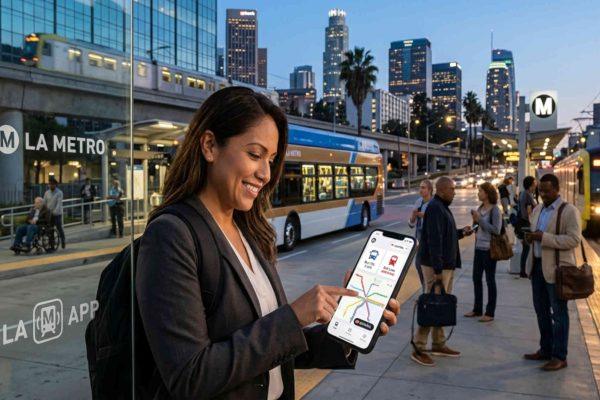
Los Angeles is taking a big step toward smarter public transit with the launch of a new digital platform from LA Metro. This isn't just another app — it's a real-time data tool designed to give riders accurate information on where trains and buses are, when they'll arrive, and how to navigate the system with less guesswork. For a city as sprawling and diverse as Los Ángeles, that kind of clarity matters.
The app arrives at a crucial moment. With the 2028 Olympic Games on the horizon, LA is under pressure to modernize its infrastructure and make public transportation more reliable. But the benefits are immediate for the millions who ride Metro every day, especially the Latino community, which makes up nearly half of the city's population. Having an app that works in Spanish — and dozens of other languages — means more people can move through the city with confidence.
Real-Time Data, Real-World Impact
One of the standout features is the live tracking of vehicles. Instead of wondering if the bus is late or if the train is coming, users can see exactly where their ride is on a map. The app also sends instant alerts about delays, service changes, or disruptions. That kind of transparency helps riders plan their days better and avoid the frustration of waiting at a stop with no information.
The platform also includes step-by-step navigation that guides users from their starting point to their final destination, reducing the chance of missing a stop or getting lost. For those who commute daily, the saved favorites feature lets them store frequently used stations, making trip planning faster and more efficient. This isn't just about convenience — it's about making the system work for everyone, regardless of their familiarity with the city.
As Los Angeles prepares for major international events like the Olympics and the World Cup, tools like this become essential. For context on how the city is handling the upcoming World Cup parking crunch at SoFi Stadium, check out our guide on navigating the parking situation.
Multilingual Access as a Equity Tool
Perhaps the most significant aspect of this launch is its commitment to inclusivity. The app can be configured in 40 languages, breaking down barriers that have historically made public transit less accessible for immigrant and low-income communities. Spanish, of course, is a priority, but the range of languages reflects the true diversity of Los Ángeles, where over 200 languages are spoken.
Community organizations have praised the move, noting that access to reliable transit information is a matter of equity. When people can't understand the system, they're less likely to use it — and that limits their access to jobs, education, and healthcare. By offering real-time data in multiple languages, LA Metro is taking a concrete step toward ensuring that the right to mobility is not just a slogan but a reality.
This digital push also aligns with broader efforts to make Los Angeles a more connected and equitable city. The Lucas Museum of Narrative Art, set to open in 2026, will feature works by Diego Rivera and Judy Baca, further cementing LA's role as a cultural hub. You can read more about that here.
Looking Ahead
The app is part of a larger strategy to transform LA's transit network before the world's attention turns to the city in 2028. But for now, it's already making a difference for riders who just want to get where they're going without the stress of uncertainty. As the system continues to evolve, tools like this will be key to building a transit network that serves everyone — not just those who can afford cars or ride-hailing services.
For those interested in how technology is reshaping urban life in Los Angeles, the city is also experimenting with delivery robots that assist blind pedestrians. Learn more about that initiative here. And if you're looking for smarter travel alternatives in 2026, check out our list of travel dupes that offer less crowded experiences.