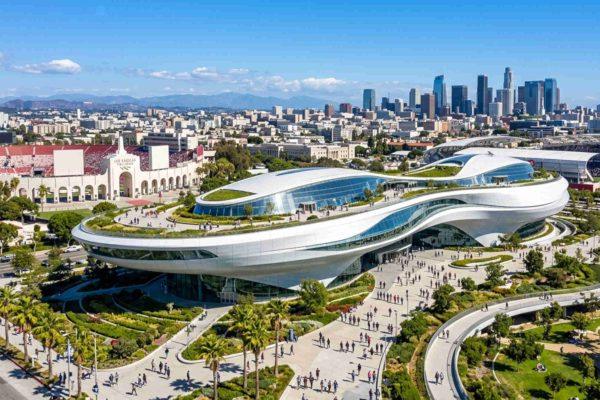
After years of anticipation, the Lucas Museum of Narrative Art is finally set to open in September 2026 at Exposition Park in Los Angeles. Founded by filmmaker George Lucas and his wife Mellody Hobson, this institution aims to explore the power of visual storytelling through a massive collection of 40,000 works, ranging from classical art to manga and pop culture. For the Latino community, the inclusion of muralists like Diego Rivera and Judy Baca marks a significant recognition of our artistic heritage within this ambitious project.
An Architectural Marvel in Exposition Park
The museum's design, led by architect Ma Yansong of MAD Architects, has already transformed the Los Angeles skyline with its futuristic, spaceship-like structure. This avant-garde building houses 30 thematic galleries that will take visitors on a journey through myths and legends from antiquity to the present day. The inaugural exhibition alone will feature over 1,200 pieces, offering a diverse array of narratives that reflect the complexity of human experience.
Far from being just a repository for Lucas's personal collection, the museum will showcase essential works by artists such as Norman Rockwell and Frank Frazetta, alongside classic illustrations from Winnie-the-Pooh and contemporary graphic novels. The integration of manga and anime ensures that the museum appeals to a broad audience, from art scholars to families seeking an educational and visually striking experience. As Los Angeles continues to solidify its status as a global cultural hub, this museum adds to the city's vibrant landscape, which already includes a thriving Latino culinary scene that has made it a gastronomic capital.
Art as a Social and Educational Tool
The curatorial mission of the Lucas Museum of Narrative Art is to examine how images build our collective identity. Thematic galleries explore universal concepts such as family, work, love, and adventure, blending Dorothea Lange's documentary photography with Jack Kirby's comics and digital art. This inclusive approach positions graphic storytelling as a highly relevant social tool, democratizing access to culture for all visitors.
For the Latino community, the presence of Diego Rivera's murals and Judy Baca's works is particularly meaningful. Rivera, a Mexican muralist, and Baca, a Chicana artist from Los Angeles, represent the rich tradition of narrative art in Latin America and the diaspora. Their inclusion underscores the museum's commitment to showcasing diverse perspectives and honoring the artistic roots that have shaped our understanding of the world. This recognition is especially important as Los Angeles continues to evolve, with initiatives like delivery robots aiding blind pedestrians and the city rising to become the third best coffee city in the U.S., fueled by Latino creativity.
A Cultural Milestone for the Decade
The opening of the Lucas Museum of Narrative Art promises to be one of the most significant cultural milestones of the 2020s. By breaking down barriers between traditional art and popular forms of visual storytelling, the museum offers a space where everyone can find something that resonates. Its location in Exposition Park places it within a larger cultural corridor that includes the California Science Center and the Natural History Museum of Los Angeles County, making it an ideal destination for both locals and tourists.
As the city prepares for this grand opening, it's worth noting that Los Angeles is also gearing up for other major events, such as the World Cup at SoFi Stadium, which will bring additional attention to the region. The Lucas Museum stands as a testament to the power of narrative art to connect people across cultures and generations, and its focus on inclusivity ensures that it will be a welcoming space for all.
In a world where visual media increasingly shapes our perceptions, this museum offers a unique opportunity to reflect on the stories that define us. Whether you're a fan of classic art, comic books, or digital media, the Lucas Museum of Narrative Art invites you to explore the myths and legends that have shaped human civilization. Its opening in 2026 will undoubtedly solidify Los Angeles as a global benchmark for museum innovation and narrative art.