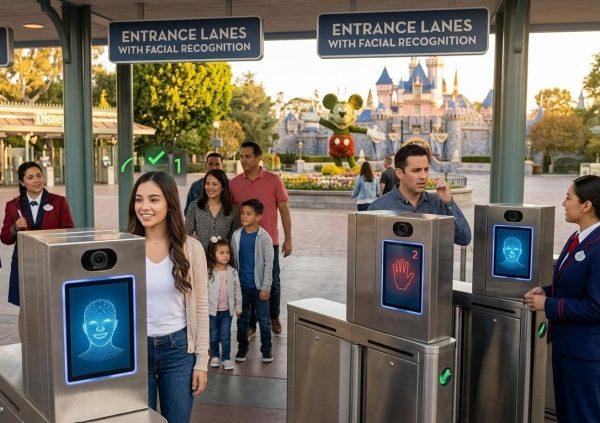
Disney has introduced a new entry system at its theme parks that uses facial recognition to let visitors in faster. The technology, which turns your face into a digital key, aims to cut down wait times and stop people from sharing annual passes. But as the cameras start scanning, a bigger question emerges: how much of our privacy are we willing to trade for a few extra minutes on Space Mountain?
How It Works
When you approach the gate, cameras capture your face and convert it into a unique numeric code. That code is instantly matched against the photo stored on your ticket or annual pass. The process takes seconds, and for many families visiting from cities like México City or Bogotá, where long lines are a known frustration, the speed is a welcome change. Disney says the system also helps prevent fraud, a common issue with season passes that are often shared among friends.
Most visitors now choose the facial recognition lane because it’s simply faster. But the convenience comes with a catch: your biometric data is now part of the transaction. Disney assures that it deletes facial data within 30 days unless legally required to keep it longer. Still, for a generation of Latinos who have seen data breaches affect everything from concert tickets to bank accounts, trust doesn’t come easy.
The Privacy Question
Digital rights groups like the Electronic Frontier Foundation have raised red flags. They warn that companies collecting biometric data become prime targets for hackers. Even if Disney’s intentions are good, no system is completely secure. The company itself admits, with a rare dose of honesty, that no security measure is infallible.
At the park gates, signs inform visitors about alternative lines that don’t require facial scanning. But in practice, the social pressure to avoid long waits pushes almost everyone to accept the procedure. This raises an uncomfortable question: is it really a voluntary choice if the alternative means losing precious time with your family? For many Latino families who save up for months to visit Disney, every minute counts.
This trend isn’t limited to Disney. Sports stadiums and large businesses across California are adopting similar systems, all under the banner of convenience and security. The normalization of facial surveillance in public spaces is changing how we interact with the world. Leaving home increasingly means being identified by machines.
For now, Disney’s system is optional, but the convenience factor is making it the new standard. As the technology spreads, it’s worth asking: are we heading toward a future where our faces are our tickets to everything? For a community that values both family time and personal privacy, the answer isn’t simple.
If you’re planning a trip, you might want to check out Disney World Tickets to Hit $219 by 2027: What Families Need to Know for more on costs. And if you’re looking for other ways to spend your time, Karol G's Tropitour Presale Sparks Frenzy as Fans Rush for Tickets might be a better bet for a fun day out without the biometrics.