Remember the panic of patting down your pockets for your car keys before leaving the house? That ritual is quickly becoming a thing of the past. Across the automotive world, from the bustling streets of São Paulo to the highways of México, a quiet revolution is taking place: your smartphone is becoming your car key.
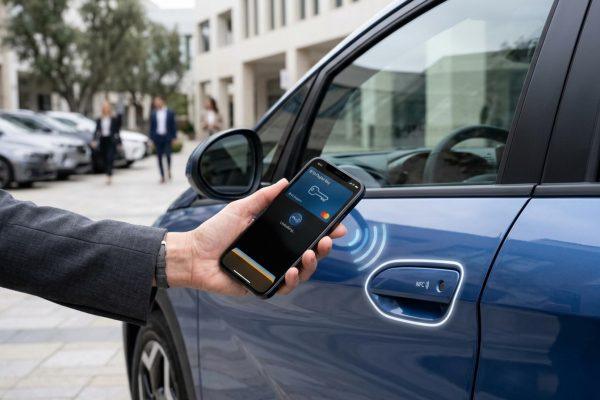
Electric vehicles like the BYD Dolphin are leading this charge, integrating Near Field Communication (NFC) technology and digital wallets to let drivers unlock and start their cars with just a tap of their phone. No more fumbling for a fob—just bring your device close to the door handle, and you're in. This isn't just about convenience; it's about rethinking how we interact with our vehicles.
How It Works: Security Meets Simplicity
The process is straightforward but secure. You download the manufacturer's official app, register your vehicle, and verify ownership. The digital key is then encrypted and stored in your phone's wallet, much like a credit card. When you approach your car, the NFC chip in your phone communicates with the vehicle's sensors, authenticating your identity and unlocking the doors. This short-range communication ensures that only you—or someone you authorize—can access the car.
This technology is already standard in models from Tesla, BMW, and Mercedes-Benz, and it's trickling down to more affordable options like the BYD Dolphin. For Latino drivers in cities like Bogotá or Los Angeles, where car theft is a concern, this added layer of security is a welcome upgrade. The digital key can be revoked remotely if your phone is lost, and it's harder to clone than a traditional key fob.
More Than Just Unlocking: Total Control from Your Palm
Once you're inside, the smartphone becomes a command center. Through the app, you can check tire pressure, monitor battery range, and even pre-condition the cabin temperature before you step in. On a hot day in México City, you can cool down the car from your office. In a chilly Buenos Aires morning, you can warm up the seats before you even reach the parking lot.
This level of control extends to diagnostics. The app alerts you to anomalies—a door left ajar, a window open, or a tire losing pressure. It's like having a mechanic in your pocket, giving you peace of mind whether you're commuting in Santiago or road-tripping through the Andes.
The BYD Dolphin: A Benchmark for the Americas
The BYD Dolphin, a compact electric hatchback gaining popularity in Latin America, exemplifies this shift. With a 130 kW motor producing 174 horsepower, it accelerates from 0 to 100 km/h in 8 seconds. Its LFP battery offers a range of up to 397 km, and fast charging via standard European connectors makes it practical for daily use. But its real standout feature is the digital key integration, which makes it a tech-forward choice for drivers who want both efficiency and innovation.
As more Latin American countries invest in charging infrastructure—Chile, Colombia, and Brazil are leading the way—the Dolphin and similar models are becoming viable options for eco-conscious drivers. The digital key is just one part of a broader shift toward connected mobility.
Industry Giants and the Future of Access
Tesla, BMW, Audi, and Mercedes-Benz have already made digital keys a standard feature in many models. BMW's "Digital Key" allows sharing access with family members via iMessage, while Tesla's app lets you remotely start the car and even summon it from a parking spot. This trend is moving toward interoperability, where your digital wallet holds not just your money and plane tickets, but also your car keys.
For the bicultural Latino audience, this is especially relevant. Many of us split time between countries or cities, and having a single device that manages access to your car, your home, and your digital life simplifies everything. It's a small but meaningful step toward a more connected future, where technology serves our mobility without adding complexity.
As WhatsApp adds dual accounts and AI editing for iPhone users, and Netflix bets on mobile-first viewing, the smartphone is becoming the hub of our daily lives. The car key is just the latest thing to go digital. And for drivers across the Americas, that's a welcome change.