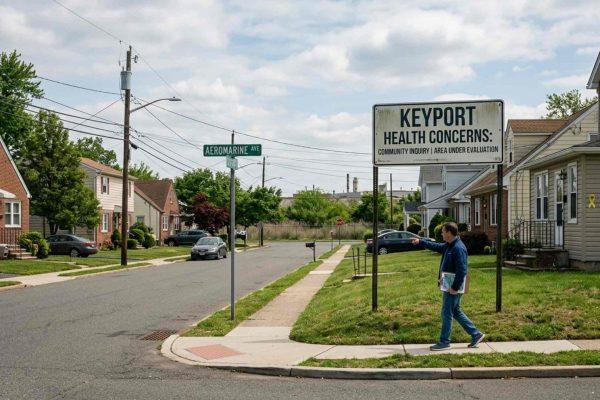
In the quiet borough of Keyport, New Jersey, a health crisis is unfolding that has shattered the peace of a tight-knit community. Residents on one street have documented 28 cancer cases, bringing the total to 41 across the municipality. For locals like 46-year-old Rusty Morris, who watched his own father battle the disease, the numbers are not a coincidence—they are a map of tragedy.
The focus of concern is the Aeromarine Industrial Park, a 50-acre site that operated as a landfill until 1979, an era when environmental regulations were far less stringent. According to the New Jersey Department of Environmental Protection, the site has released toxic substances into the air, soil, and water for decades. A 2010 technical study identified at least five carcinogens linked to the types of cancer now afflicting the neighborhood, including leukemia, lymphoma, and lung, breast, and prostate tumors.
A Community's Call for Action
Professor Alexis Mraz of The College of New Jersey has called the percentage of cases “incredibly high” for such a small area, sparking alarms over a potential disease cluster. Despite this, health authorities have not yet granted the area an official “cancer cluster” designation, which would trigger specific response protocols. Epidemiologist Scarlett Gomez emphasizes that the priority should not be the bureaucratic label but remedial action. “The community needs protection and land decontamination immediately,” she says.
The Keyport community is demanding that cleanup efforts begin without delay. They fear that without intervention, the “fading neighborhood” will continue to add names to a list that is already far too long. The situation echoes broader environmental justice concerns across the United States, where marginalized communities often bear the brunt of industrial pollution. For Latino residents in New Jersey and beyond, this story resonates deeply, as many live in areas with similar histories of lax regulation.
While the state has previously sanctioned the property owner for failing to properly seal the landfill, residents say more is needed. The Aeromarine site remains a ghost haunting the neighborhood, a reminder of past negligence that continues to impact lives today. As the community awaits official action, they are organizing and raising awareness, hoping to prevent further suffering.
This crisis also highlights the importance of environmental health in Latino communities across the Americas. From the industrial corridors of New Jersey to the mining towns of México and the oil fields of Venezuela, the fight for clean air and water is a shared struggle. For now, Keyport stands as a stark example of what happens when regulation fails and communities pay the price.
For more on how environmental issues affect Latino communities, read about New Jersey's $150 World Cup Train Fare Sparks Outrage Among Fans and FIFA and Carlos Vives Brings Hispanic Pride to New York: A Night of Roots and Unity at Radio City.