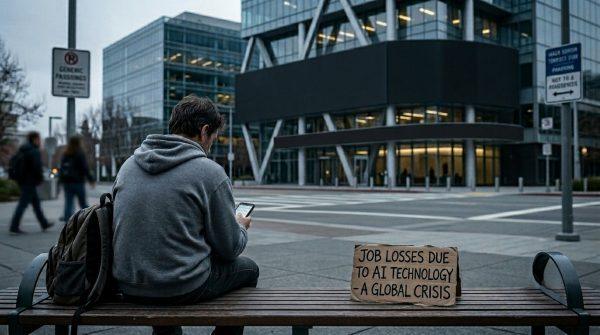
In 2026, the tech industry is undergoing a seismic shift as artificial intelligence drives mass layoffs at an unprecedented pace. Over 40,000 positions were eliminated in a single month, with nearly 150,000 workers affected throughout the year, according to data from TrueUP. This represents a 44% increase in daily layoffs compared to the previous year, signaling a volatile environment for professionals across the Americas, including the growing Latino tech workforce in cities like San José, México City, and São Paulo.
Corporate leaders at firms such as Block, Uber, and Atlassian frequently point to automation and operational efficiency as the primary reasons for these cuts. For three consecutive months, AI has been cited as the leading cause of workforce reductions, per analysis from Challenger, Gray & Christmas. Yet, this narrative is increasingly contested. Prominent investor Marc Andreessen argues that companies are using AI as a convenient “excuse” for restructuring, noting that many tech firms still carry a surplus of personnel—between 25% and 75%—from the aggressive hiring cycles of 2020-2021.
The Economic Paradox Hits Latino Communities
This wave of layoffs creates a stark economic paradox: while companies achieve record valuations, the average worker faces rising living costs. Essential services like healthcare have spiked by up to 7% in the last year, intensifying the social impact of these technological transitions. For Latino workers—who make up a significant portion of the tech workforce in the United States and are increasingly prominent in tech hubs across Latin America—the consequences are particularly acute. In cities like Bogotá and Buenos Aires, where tech talent has boomed, the threat of automation looms large.
Specific corporate examples illustrate this shift. Block reduced its workforce significantly under the premise of new AI-driven operations, while Uber eliminated a portion of its human resources division after prioritizing budget allocations for advanced machine learning tools. These moves echo broader trends in the industry, where efficiency gains are prioritized over job security.
Debating the Real Cause
Industry voices continue to debate whether AI is the true culprit or a convenient scapegoat. Many analysts view current layoffs as a natural market correction following over-hiring during the pandemic. However, the integration of AI undeniably transforms daily operations and long-term business strategies. As companies prioritize automated profit maximization, employees must navigate an increasingly uncertain landscape where machines rapidly evaluate their skills.
This phenomenon is not limited to Silicon Valley. In Latin America, tech hubs like Medellín and Santiago de Chile are seeing similar pressures, as multinational firms and local startups alike adopt AI tools to streamline operations. The region’s growing tech sector, once a beacon of opportunity, now faces the same automation-driven disruptions as its northern counterparts.
What This Means for Latino Workers
For Latino professionals in the US, the layoffs compound existing challenges. Many work in roles that are vulnerable to automation, such as customer service, data entry, and software testing. Meanwhile, programs like Meta's free AI training program aim to upskill workers for construction trades, but the broader tech sector remains precarious. The World Cup 2026 tourism crisis has already highlighted the strain on Latino workers in hospitality, and now tech faces its own reckoning.
Economists agree that while AI drives efficiency, current policies fail to adequately support those displaced by massive structural changes. The workforce bears the brunt of this transition as firms leverage new tools to downsize operations and streamline expenses. The ongoing trend of job losses due to AI will likely force policymakers to reconsider the balance between innovation-driven profit and the stability of the global tech workforce.
As the tech sector remains a primary driver of modern economic growth, the implications of these layoffs extend far beyond Silicon Valley. Maintaining a healthy labor market requires a rigorous examination of how companies deploy AI and whether automated efficiency should supersede human job security in the long term. For Latino workers across the Americas, the answer to this question will shape their economic future for decades to come.