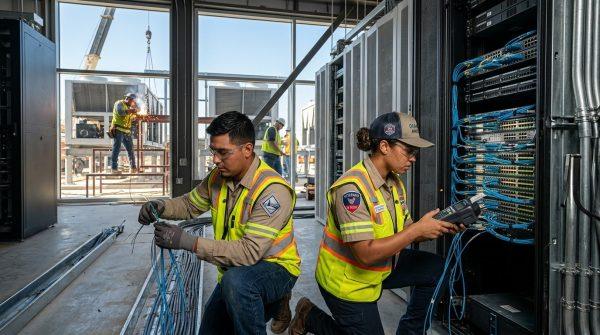
Meta is betting big on human hands to build the infrastructure that powers artificial intelligence. The company has launched a multimillion-dollar initiative called America's Workforce Academy (AWA) that provides free training for electricians, welders, and fiber optic technicians—trades that are suddenly in high demand as data centers multiply across the United States.
The program covers all expenses: training, transportation, lodging, and even a daily stipend so participants don't have to worry about lost income while they learn. After five intensive weeks, graduates walk away with a nationally recognized certification from the NCCER and a guaranteed job offer from Meta's contractors. No prior experience required, no debt incurred.
Why This Matters for Latino Communities
Hispanic workers already represent nearly 30% of the U.S. construction workforce, according to the Bureau of Labor Statistics. Yet many remain in informal or lower-paid roles. This program offers a direct path into specialized, high-wage positions—the average salary for these data center jobs is $81,800 a year, well above typical construction pay.
“This isn't just about filling jobs,” said a Meta spokesperson in the program's announcement. “It's about creating a pipeline for people who have been locked out of the tech economy.” The company is partnering with local contractors and unions to ensure the training meets real-world standards.
The first pilots are scheduled for 2026 in Texas, Ohio, Indiana, and Louisiana—states where Meta is actively building new data centers. Initially, 3,300 positions will be available, but the company expects to scale up as demand grows. The construction industry currently faces a shortage of 349,000 workers, according to the Associated Builders and Contractors, and the need for electricians alone is projected to reach half a million in the coming years.
For many Latino workers, this program could be a game-changer. It eliminates the traditional barriers of upfront costs and uncertain job prospects. Participants know before they start that a job is waiting for them. The credential they earn is valid nationwide, giving them mobility beyond a single project or employer.
“This is the kind of opportunity that can break cycles of economic vulnerability,” said labor economist Dr. Elena Ríos in an interview with Latino World News. “It's not just a job—it's a career path with real stability.” She noted that the program's inclusive design—open to veterans, recent high school graduates, and career changers—makes it especially accessible to communities that have been underserved by traditional tech training.
Meta's investment also reflects a broader shift in the tech industry. As artificial intelligence expands, the physical infrastructure that supports it—data centers, fiber optic networks, power grids—requires skilled tradespeople. The company is essentially betting that training workers today will pay off in the long run, both for its own operations and for the broader economy.
For Latino families, the stakes are high. The wage gap between construction trades and other sectors has been widening, and inflation has eroded purchasing power. A specialized certification can mean the difference between a $35,000 annual income and one that exceeds $80,000. In cities like Houston, where Meta is building a major data center, that kind of jump can transform a household's financial future.
Applications for the 2026 pilots will open later this year. Meta has not yet announced a specific date, but interested workers can sign up for updates on the company's website. The program is expected to expand to additional states as more data centers come online.
In the meantime, the message is clear: the AI boom isn't just for software engineers. It's also for the electricians, welders, and fiber optic techs who make it all possible—and Meta is willing to pay for their training.