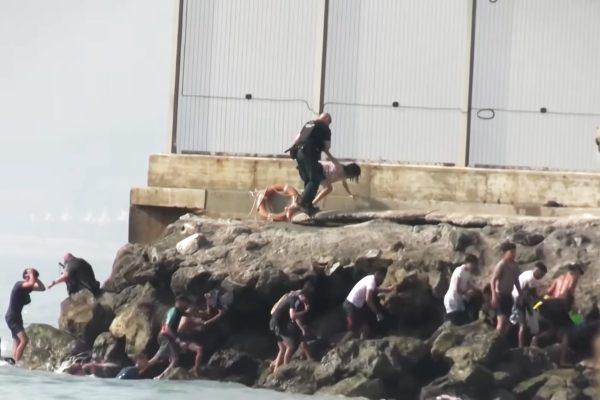
In a matter of hours, the Spanish enclave of Ceuta went from a quiet North African outpost to the epicenter of a humanitarian emergency. Thousands of migrants, mostly young Moroccan men, swam around the coastal barriers near the Tarajal border, overwhelming reception centers, public parks, and emergency services. At least 34 people lost their lives at sea, and Ceuta's president, Juan Jesús Vivas, declared an absolute humanitarian emergency, calling for military support to secure the border.
Why now? The forces behind the sudden surge
The border between Morocco and Ceuta has always been porous, but this sudden escalation didn't happen in a vacuum. Morocco's youth unemployment rate sits above 37 percent, a persistent economic pressure that pushes many young people to seek opportunities elsewhere. But the immediate catalyst, according to Spanish Interior Ministry officials, was a recent ruling by Spain's Supreme Court that prohibited summary returns without due process. Human trafficking networks seized on this legal nuance, spreading misinformation on social media that the ruling was an open invitation for irregular entry.
For many of the migrants, the decision to risk their lives was a desperate calculation. "We know the risks, but there is no future for us here," one young Moroccan told local media, echoing the sentiments of many who made the perilous swim. The economic disparity between Morocco and Spain, visible just a few kilometers across the Strait of Gibraltar, remains a powerful pull.
Spain's political firestorm
The crisis quickly became a political battleground in Madrid. Opposition leaders accused Prime Minister Pedro Sánchez of weakening border security, linking the influx to his government's plans to regularize undocumented migrants. Sánchez, who traveled to Ceuta to assess the situation, defended his administration's approach, emphasizing coordination with Moroccan authorities to restore order. The debate reflects a broader tension in Spanish politics between humanitarian obligations and border control, a tension that resonates across the European Union.
For the people of Ceuta, the crisis is not just political. The enclave, with a population of around 85,000, has seen its resources stretched to the limit. Local residents have shown both solidarity and frustration, as public spaces fill with migrants awaiting processing. The city's geographic position—a European outpost on the African continent—makes it a unique flashpoint for migration debates.
Europe reacts: diplomatic ripples
The breach of an EU external border sent shockwaves through European capitals. Conservative leaders, particularly in Italy and France, voiced sharp criticism. Italian officials suggested revisiting the Schengen Agreement to tighten internal mobility, while France reinstated border checks along its southern perimeter. The crisis also drew international commentary, with some observers using it to critique the EU's migration framework, placing North Africa's territorial dynamics in a broader global security context.
This isn't the first time Ceuta has been in the spotlight. The enclave has long been a symbol of the complex relationship between Spain and Morocco, a relationship marked by economic interdependence and unresolved territorial disputes. The current crisis underscores how fragile that balance can be.
What lies ahead
As emergency workers work to restore order, the long-term challenges remain. Moroccan officials have encouraged citizens to return and reaffirmed their support for legal migration channels, but the underlying drivers—economic hardship and limited opportunity—persist. The crisis also highlights the need for sustained bilateral cooperation between Madrid and Rabat, not just to manage borders but to address the root causes of migration.
For the Latino community, this story may feel distant, but it echoes themes familiar across the Americas: the desperation that drives people to risk everything for a better life, the political debates over borders and humanity, and the resilience of those who make the journey. As Spain and Morocco navigate this crisis, the world watches, reminded that migration is a shared human story, one that transcends geography and politics.