For decades, the intersection where San Vicente Boulevard meets Olympic Boulevard and Fairfax Avenue has been a source of frustration for Angelenos. Known as the “San Vicente Asterisk,” this six-way junction is often cited as one of the most complex and congested traffic points in California. Its diagonal alignment, a leftover from the old Pacific Electric rail corridor, forces drivers into a series of stops across six lanes, creating daily delays, hazardous conditions for pedestrians, and a constant hum of noise through the Mid City area.
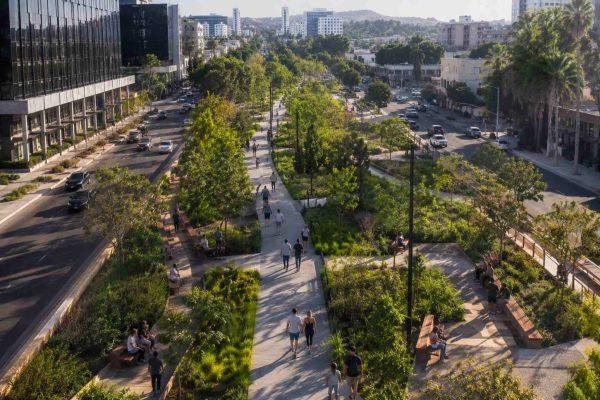
Now, a bold proposal aims to transform this asphalt-heavy corridor into a lush, linear park. The San Vicente Park Foundation, led by architect Michael Wacht, envisions replacing significant stretches of roadway with a 90-foot-wide, 3.2-mile greenway stretching from Mid City toward the Beverly Center. The design would reduce vehicle traffic to a single lane in each direction, reserved for local access, while creating a continuous ribbon of parks, pedestrian paths, and native landscaping.
A green vision for a concrete jungle
The concept is simple: take the space once used by the Red Car trolley system and give it back to people. The park would not only provide much-needed green space in a neighborhood that has historically lacked it, but it would also eliminate the complex diagonal turns that snarl traffic. By simplifying the intersection, the plan aims to improve overall traffic flow, even with fewer lanes.
Supporters point to the region's expanding transit network as a key reason to reimagine the corridor. With the recent extension of the D Line subway and planned K Line light rail additions, the area is becoming better connected by high-capacity public transit. Reducing road capacity along major transit corridors aligns with long-term mobility goals, they argue. This project joins other green infrastructure efforts across Los Angeles, such as Destination Crenshaw and freeway-capping proposals in Santa Monica and Hollywood, all aimed at addressing the city's park deficit.
“This is about more than just traffic,” said a spokesperson for the foundation. “It's about creating a healthier, more livable city for everyone.”
Community support and next steps
The proposal has received preliminary backing from local neighborhood advisory councils, but it remains in early conceptual stages. No formal adoption by municipal bodies has occurred yet. Preliminary cost estimates put the project at around $200 million, with a construction timeline of two to five years after regulatory approvals. The foundation is currently focused on securing funding for comprehensive traffic and environmental impact studies, which are required before city council members and engineering departments can evaluate the project for official prioritization.
For Latino residents in the surrounding neighborhoods, the park could offer more than just a place to walk. It could become a community hub, a space for cultural events, and a much-needed respite from the urban heat island effect. Similar projects, like BelicoFest's debut at BMO Stadium, have shown how public spaces can bring together diverse communities.
Balancing trade-offs
Not everyone is convinced. Reducing vehicle lanes will likely increase drive times for some, even if the simplified intersection improves overall traffic organization. Municipal leaders and community stakeholders will ultimately decide whether trading vehicular capacity for expanded public green space provides a net benefit for nearby residential areas.
The debate over San Vicente Boulevard is part of a larger conversation about how Los Angeles allocates its public space. As the city grows and transit options expand, questions about whether to prioritize cars or people become more pressing. For now, the San Vicente Park proposal offers a glimpse of what a greener, more pedestrian-friendly future could look like—if the city is willing to take the leap.
For those interested in the broader context, California's economic report shows the state's resilience, and new e-bike laws are changing how families get around. The San Vicente plan, if realized, would be another step toward reimagining urban life in Los Angeles.