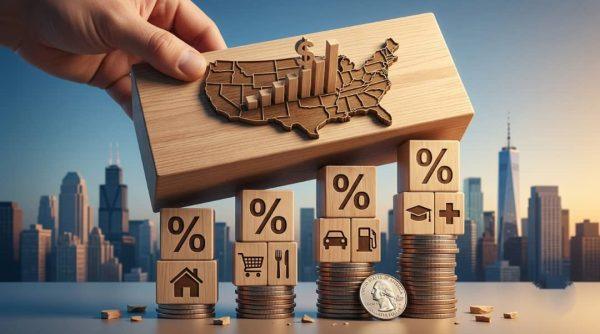
For months, the US economy seemed to defy gravity, with consumer spending propping up growth despite rising prices. But that resilience is cracking. Inflation is now cutting deep into household budgets, and Latino families—who often face higher living costs and lower average wages—are feeling the strain acutely.
Recent data from the Bureau of Economic Analysis shows that the personal savings rate has plummeted to 2.6%, the lowest in two decades. That’s down from 5.5% a year ago. For many, the financial cushion that once offered a sense of security has all but vanished. Meanwhile, credit card delinquencies have hit their highest level since 2011, with nearly 13% of accounts now past due. Plastic, once a convenience, has become a risky lifeline.
Wages Can’t Keep Up
Even as nominal wages rise, real disposable income—what’s left after inflation—fell more than 1% year-over-year, according to PNC Financial Services. That’s the steepest drop since the 2009 global financial crisis. For middle-income Latino families in cities like Houston, Los Angeles, and Miami, this means every dollar buys less, especially for essentials like rent, food, and gas.
“The gap between wage growth and the cost of living is eroding purchasing power,” said a PNC economist. “Households are making tough choices.”
At Walmart gas stations, the average volume per fill-up has dropped noticeably. Drivers are buying fewer gallons per visit—a clear sign that even commuting costs are being squeezed. For many Latinos who rely on cars to get to work in sprawling metro areas, this is a direct hit to daily life.
Retirement Funds Become Emergency Cash
The immediate need for cash is also reshaping long-term financial plans. A Fidelity report shows that hardship withdrawals and loans from 401(k) retirement accounts have increased. Applications citing severe financial difficulty rose to 2.5% this quarter. Dipping into retirement savings is a last resort, but for many, the present urgency outweighs future stability.
This trend is especially concerning for Latino seniors, who already face higher poverty rates in retirement. As we’ve reported, inflation and rising costs are squeezing Latino seniors harder than most.
What This Means for Latino Families
Inflation doesn’t affect everyone equally. Latino households often have less wealth to fall back on, making them more vulnerable to price shocks. The drop in savings and rise in credit card debt are warning signs that many are one emergency away from financial crisis.
Programs like CalFresh, which help low-income families put food on the table, are facing cuts. In Los Angeles County alone, 260,000 people could lose benefits. For Latino families already stretched thin, that’s a devastating blow.
The broader picture is clear: the era of easy spending is over. Families are cutting back, borrowing more, and sacrificing the future to get through today. For the Latino community, which has long been a pillar of the US workforce and consumer base, this is a moment that demands attention—and action.