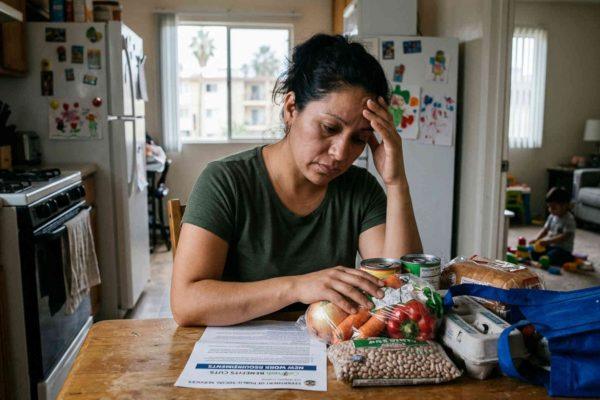
For thousands of households across Los Angeles County, the struggle to put food on the table is about to get harder. Starting this year, new federal work requirements threaten to strip CalFresh benefits from nearly 260,000 residents — a change that hits Latino communities especially hard.
The rules, part of a broader federal funding cut to nutrition assistance, require able-bodied adults between 18 and 64 without dependents under 14 to work at least 20 hours a week or participate in approved job training. Those who can't meet the threshold risk losing their food stamps after just three months in a 36-month period.
Since July, more than 108,000 people in LA County have already lost their benefits, according to local officials. The impact is concentrated in low-income neighborhoods and among immigrant families who rely on CalFresh to feed their children.
A System That Ignores Real Lives
County Supervisor Hilda Solis has been vocal about the human cost. During a recent briefing, she shared the story of a mother whose husband was detained by ICE, leaving her alone to care for three children with no formal employment. "These policies ignore the complex realities facing many Latino families," Solis said. "They create insurmountable barriers for those already struggling to make ends meet."
The anxiety doesn't stop at the grocery line. Many beneficiaries worry that applying for food assistance could put them on a government list, especially as state agencies face pressure to share data with federal authorities. DPSS officials say they try to protect applicant information, but the fear of immigration consequences keeps some families from seeking help at all.
For Latino families in LA, the stakes are personal. A parent working two part-time jobs might still fall short of the 20-hour requirement if their hours fluctuate. A grandmother raising grandchildren on a fixed income may not qualify for exemptions. The system, as designed, doesn't account for the informal economy, caregiving duties, or the unpredictable schedules that define so many working-class lives.
How to Keep Your Benefits
Despite the uncertainty, there are steps families can take to protect their CalFresh access. The most important: keep your contact information updated with the Department of Public Social Services (DPSS). Miss a letter about recertification, and your benefits could be cut off before you even know there's a problem.
Beneficiaries should also review every piece of official mail carefully. Deadlines for recertification and work requirement documentation are strict. If you're unsure about your status, call DPSS at (866) 613-3777 or visit a local office in person.
The program does offer alternatives for those who can't find traditional employment. Job training, community service, and unpaid professional experience can all count toward the 20-hour requirement. For many, these options provide a bridge — a way to stay eligible while building skills that lead to stable work.
For families looking for additional support, programs like the ones highlighted in Thousands in Aid for Latino Families: US Programs You Might Be Missing in 2026 can help fill the gaps. And as Los Angeles prepares for major events like the World Cup, the city is also planning free community events across 19 parks that may offer resources and information for families in need.
This isn't just a policy debate — it's about whether families in Boyle Heights, Pacoima, and South LA will have enough to eat. The system is changing, but knowledge is power. Stay informed, stay connected, and don't let fear keep you from the help you're entitled to.