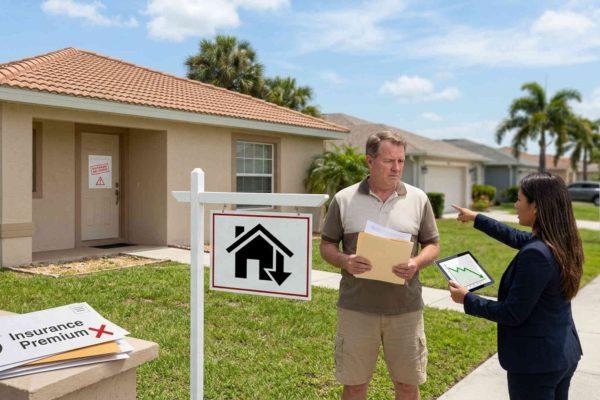
The U.S. housing market is entering a new phase in 2026, one that feels less like a crash and more like a long-overdue correction. After years of pandemic-fueled price surges, home values are finally cooling in several key regions, especially across the Sun Belt. For Latino families in Florida and other southern states, this shift brings both opportunity and anxiety.
According to recent data, home prices fell in 39 of the 129 largest metropolitan areas during the first quarter of 2026. The most dramatic drop is happening in Cape Coral-Fort Myers, Florida, where prices have fallen 9% year-over-year, bringing the median home price to $341,250. Other Florida cities like Ocala, Lakeland-Winter Haven, and Naples-Immokalee-Marco Island are also seeing notable declines.
Why Florida Is Ground Zero
Florida has become the epicenter of this housing adjustment, and it's not just about supply and demand. The state now holds the unenviable title of the most expensive place in the country to insure a home. Homeowners' insurance premiums average $8,292 annually across the state, and in counties like Monroe, Miami-Dade, and Palm Beach, that figure can soar to $22,436 per year.
“The increase in property taxes and insurance costs is the main reason prices are finally yielding to economic pressure,” explains a market analyst quoted in the report. For many Latino homeowners, especially those who bought during the pandemic boom, these rising costs are becoming unsustainable. Nearly half of Florida residents have considered moving out of the state due to the high cost of living, according to recent surveys.
This affordability crisis is pushing many owners to sell, flooding the market with inventory and driving prices down. For buyers, this could mean a rare window of opportunity, but for current homeowners, it’s a financial squeeze that’s hard to ignore. As we’ve reported in our coverage of the housing crisis, Latino families are disproportionately affected by these shifts.
Texas and the Regional Divide
Florida isn’t alone. In Texas, cities like Austin—which saw explosive growth during the pandemic—are also facing a “reality check.” Sellers who once commanded sky-high prices are now lowering expectations as homes sit on the market for months. The adjustment is a stark contrast to the frenzy of 2021 and 2022.
But not every market is cooling. Detroit, for example, has seen a 17% increase in home values, a sign that the market is shifting toward areas less affected by pandemic speculation. This regional divergence means that while some Latino communities in Florida and Texas face tough decisions, others in the Midwest may find more stable conditions.
For those considering a move, states like Nevada are becoming attractive alternatives. As we explored in our piece on Nevada’s housing appeal, the state offers a lower cost of living and more manageable insurance rates.
What’s Ahead for 2026
With mortgage rates hovering around 6.3%, buyers are operating in a more predictable environment than last year, though still far from the historic lows of the 2010s. The trend suggests that prices will continue to adjust as sellers accept successive reductions to close deals in a cautious market.
For the Latino community, this moment is a double-edged sword. Lower entry prices could make homeownership more accessible for first-time buyers, especially those who were priced out during the boom. But for existing homeowners, especially in Florida, the combination of high insurance and property taxes is a growing burden. As one analyst put it, “This is not a collapse, but a normalization—and for many, it still hurts.”
The cities seeing the biggest price drops in 2026 include:
- Cape Coral-Fort Myers, Florida (9% drop)
- Ocala, Florida
- Lakeland-Winter Haven, Florida
- Naples-Immokalee-Marco Island, Florida
- Austin, Texas
As the market continues to evolve, Latino families across the Americas and the diaspora will be watching closely. Whether you’re a buyer hoping to finally get a foothold or a homeowner navigating rising costs, this is a story that touches every corner of our community.