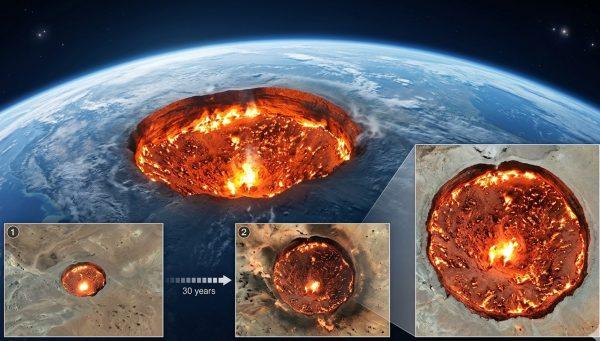
In the remote Sakha Republic of Siberia, a vast and growing scar on the Earth's surface tells a story of profound environmental change. Known locally as the 'Gateway to Hell,' the Batagaika megaslump is a crater so large it's visible from orbit. Recent data from 2026 confirms a startling acceleration: this geological phenomenon has tripled in size over the past thirty years, serving as a stark, open-air laboratory for the consequences of a warming planet.
An Unintentional Creation
The origins of Batagaika are a mix of natural history and human impact. For millennia, the ground here was locked in permafrost—soil permanently frozen since the last Ice Age. This changed in the 1960s when extensive deforestation stripped the land of its protective tree cover. Exposed to sunlight, the ground began to warm, initiating a process called thermokarst, where the subterranean ice melts and the land above collapses into the void.
What began as a small fissure has since expanded into a chasm over a kilometer long, growing by up to 30 meters each year. It is a relentless, physical manifestation of climate feedback loops, where human activity triggered a natural process that now seems impossible to halt.
A Portal to the Ancient Past
For scientists, Batagaika is more than a warning; it's a unique window into Earth's distant history. As the crater's walls slump and erode, they expose layers of sediment and organic material frozen for 2.5 million years. This 'natural laboratory' allows researchers to study ancient plant life and ecosystems, providing crucial data on how our planet's climate has shifted over eons. These insights are vital for modeling our climatic future.
This story of environmental vulnerability resonates globally, reminding us of the importance of safeguarding our data and future. Just as the permafrost reveals ancient secrets, sharing personal health data with AI carries unseen risks in our digital age, a parallel lesson in protecting what lies beneath the surface.
Myths from the Depths
To the residents of Yakutia who live near the crater, Batagaika is woven into local lore. Its ominous nickname stems not only from its gaping appearance but from the unsettling sounds that rumble from its depths—cracks, booms, and groans that some describe as subterranean screams. While geophysicists attribute these noises to the earth fracturing and collapsing, for the community, they are an audible reminder of the unstable ground beneath their homes, blending scientific reality with powerful myth.
The connection between environmental stability and community well-being is universal. For many Latino families, planning for a secure future is paramount, whether facing a changing climate or navigating retirement in the US. Both require foresight and addressing challenges head-on.
A Global Climate Signal
The expansion of the Batagaika crater is a local symptom of a planetary crisis: the rapid thawing of the Arctic. As permafrost melts worldwide, it releases enormous stores of methane and carbon dioxide—potent greenhouse gases that were trapped for millennia. This release accelerates global warming, which in turn melts more permafrost, creating a dangerous feedback loop with global implications.
The story of Batagaika is ultimately one of interconnectedness. The environmental decisions made decades ago in a Siberian forest have unlocked a process that now contributes to global climate patterns. It stands as a monumental, sobering reminder that some gates, once opened, cannot be easily closed. As the world celebrates cultural milestones, like Rosalía being named Billboard's Latin Woman of the Year, it also must confront these profound environmental challenges that transcend all borders.