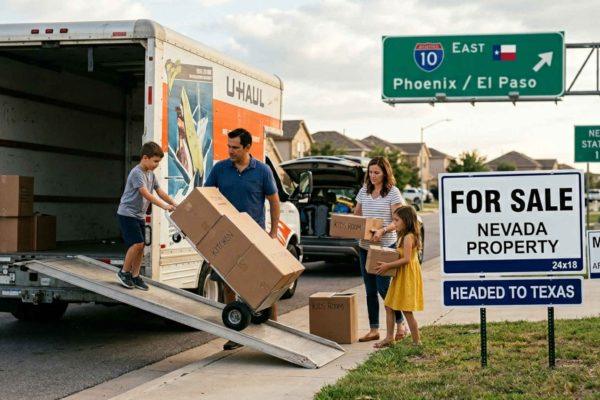
The story of people leaving California is often oversimplified. It's not just about the ultra-wealthy fleeing taxes or the desperately poor seeking cheaper rents. A revealing new study paints a more nuanced portrait: the driving force behind the state's continued population loss is its educated, working middle class—people who are financially stable yet feel permanently locked out of the California dream.
In 2025, California saw a net loss of 150,000 residents. These departing households aren't broke; many have solid incomes. But they are often saddled with significant student loan debt and maxed-out credit cards, a combination that makes competing with wealthier neighbors for housing and opportunity feel impossible. The study debunks the myth that only "failures" leave the West Coast, highlighting instead a profound affordability crisis.
The Homeownership Equation
For these families, the math is brutally clear. While in California, they are 10% less likely to own a home, burdened by lower credit scores and educational debt. The contrast is stark: new arrivals to the state have only a 6% chance of buying a house within seven years. For many, leaving has become the most logical path to the middle class. By relocating to states with lower taxes and housing costs, these former Californians are 11% more likely to become homeowners in their new communities.
The decision transcends mere economics; it's about quality of life and tangible reward for effort. Families who once paid exorbitant sums for private schools in Los Angeles or the Bay Area now report saving up to $80,000 annually thanks to quality public schools in places like Austin, Texas, or Phoenix, Arizona. Combined with lower costs for gas, groceries, and utilities, this creates immediate financial breathing room that California hasn't offered them in years.
The psychological toll of living in a place of visible, yet unreachable, abundance is significant. That mental exhaustion lifts when a family's income stretches further, allowing money to build equity in a home rather than vanish into rent. The very perception of success changes when paychecks stop being entirely consumed by basic survival.
Political Repercussions on the Horizon
This sustained internal migration is more than a demographic shift; it's a potential political earthquake. Researchers warn that California's tax base and its weight in national politics are under threat. The state already lost one Congressional seat after the 2020 census and is projected to lose up to four more after 2030. This would drastically reduce its influence in Washington, D.C., reshaping the national political landscape. The failure of state and local policies to meaningfully increase affordable housing stock suggests this exodus won't slow down soon.
With a disposable income that is 35% lower than the national average, many Californians feel they have no choice but to seek refuge elsewhere. They are trading the golden coast for states where they can be masters of their own financial destiny. This search for autonomy even finds expression in unconventional ways, like the founding of Slowjamastan, the California desert micronation, which symbolizes a deep-seated desire for a fresh start and self-determination.
The narrative is complex, especially for Latino families with deep roots in California. The state is home to vibrant, established communities from México, El Salvador, Guatemala, and beyond. Leaving can mean distancing oneself from that cultural infrastructure, even as it promises greater economic stability. The trade-offs are deeply personal.
As this trend continues, its impact will be felt far beyond moving vans and real estate transactions. It represents a recalibration of the American dream for a generation, questioning whether iconic states like California can remain engines of opportunity for anyone outside the wealthiest tier. For now, for tens of thousands of families each year, the answer lies in a highway heading east.