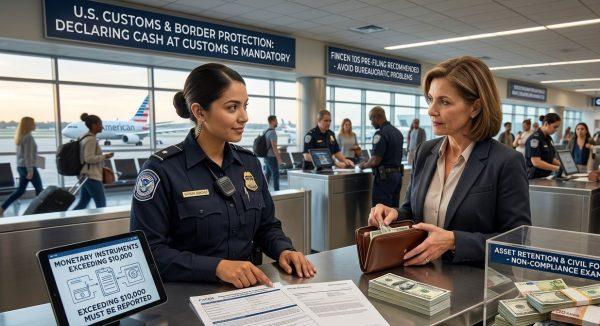
For many Latinos traveling between the U.S. and Latin America—whether visiting family in México, buying property in Colombia, or attending a festival in Argentina—carrying cash is still a common practice. But if you're planning to bring more than $10,000 into or out of the United States, you need to know the rules. The U.S. Customs and Border Protection (CBP) requires you to declare any amount over that threshold, and ignoring this can cost you your money.
The process is straightforward: you fill out a FinCEN 105 form before you arrive at the border or airport. This form asks for details about the source and intended use of the funds. It's not a tax—it's a transparency measure to combat money laundering and illicit finance. As long as the money comes from a legal source, you have nothing to fear. But if you skip this step, CBP can seize your cash on the spot, even if it's perfectly legitimate.
What Happens If You Don't Declare?
In 2024 alone, CBP seized over $152 million in undeclared currency. Many of those seizures involved travelers who simply didn't know the rules or thought they could avoid the paperwork. Once your money is taken, getting it back is a long, expensive legal process. You'll need to provide bank statements, receipts, and proof of origin to a federal court. That can take months or even years.
This is especially relevant for Latino travelers who often move money for family support, real estate purchases, or business investments. For example, a family from Houston flying to visit relatives in San Salvador might carry cash for a down payment on a house. Without a declaration, that money could be lost. The same goes for entrepreneurs from Bogotá or Lima who bring cash to invest in U.S. markets.
Best Practices for Safe Cash Transport
Financial experts recommend a few simple steps to avoid trouble:
- File the FinCEN 105 form before you travel. You can download it from the CBP website and fill it out in advance. This small step can save you from a major headache.
- Use electronic transfers when possible. Bank wires or services like Wise leave a clear trail and reduce the risk of carrying physical cash. This is especially useful for larger sums.
- Keep documentation handy. If you must carry cash, bring bank statements, sale receipts, or any paperwork that proves the money's origin. This helps if you're selected for a secondary inspection.
- Consider cashier's checks for big purchases. For real estate or high-value transactions, a cashier's check is safer and easier to trace than a stack of bills.
For those traveling during the 2026 World Cup, when many Latin American fans will head to U.S. cities like Houston and New York, these rules become even more critical. Airbnb is already targeting Latino travelers with special offers, but no one wants to lose their savings at customs.
Ultimately, the key is transparency. CBP officers are trained to spot suspicious behavior, but if you're upfront about your cash, you'll pass through without issue. As one customs attorney put it, "The form is a five-minute task that can save you years of litigation." So before you pack your bags for that trip to México City, Buenos Aires, or San Juan, make sure you've declared your cash. Your wallet—and your peace of mind—will thank you.