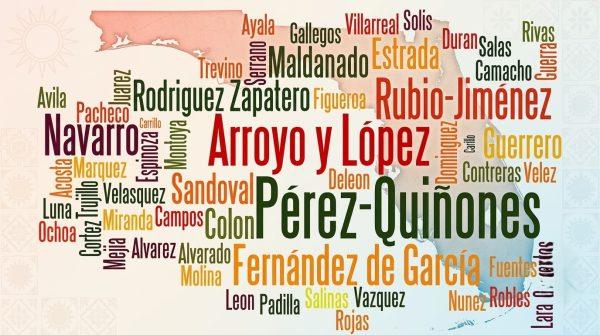
Florida's most common last names tell a story that goes beyond simple genealogy—they reveal how migration from Latin America has fundamentally reshaped the state's identity. According to recent U.S. Census Bureau data, surnames like García, Rodríguez, and Martínez now rank among the most frequent in Florida, a shift that mirrors decades of demographic change driven by communities from Cuba, Puerto Rico, México, Colombia, Venezuela, and beyond.
While names like Smith, Johnson, and Williams still dominate nationally, Florida stands apart. Here, Hispanic-origin surnames don't just appear on the list—they compete directly with traditional Anglo-Saxon ones. García, for instance, holds the 6th spot nationwide, while Rodríguez has climbed to 9th, and Martínez rounds out the top 10. In Florida, these names are even more prominent, reflecting the state's role as a gateway for Latino families seeking opportunity, stability, and connection to a broader diaspora.
A Demographic Shift Decades in the Making
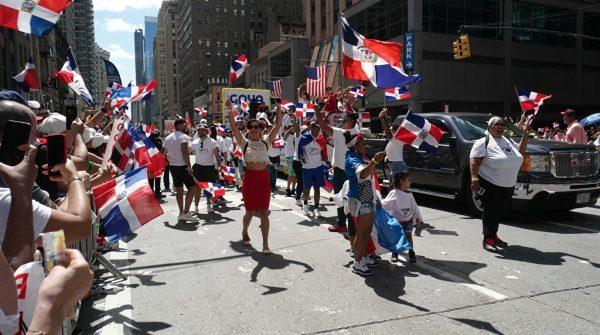
The transformation didn't happen overnight. Over the past three decades, Florida's Latino population has grown from roughly 12% to over 26% of the state's residents, according to census estimates. Cities like Miami, Orlando, Tampa, and Jacksonville have become hubs where Spanish is heard as often as English, and where cultural traditions from quinceañeras to Día de los Muertos celebrations are woven into the local fabric.
This demographic evolution is not just about numbers—it's about the stories behind them. A family named García in Miami might trace its roots to a Cuban exile who arrived in the 1960s, while a Rodríguez in Orlando could be part of a Puerto Rican family that moved for work in the 1990s. A Martínez in Tampa might have grandparents who came from México as agricultural workers. Each surname carries a history of migration, resilience, and adaptation.
The impact extends beyond family trees. As Latino communities expand across Florida, they're reshaping local economies, politics, and culture. From the rise of bilingual education programs to the growing influence of Latino voters in state elections, the presence of these communities is impossible to ignore.
Beyond the Top 10: A Broader Cultural Shift
The census data also reveals a broader trend: while Hispanic surnames are gaining ground, other immigrant communities are leaving their mark too. Asian-origin surnames like Zhang, Liu, and Wang have seen growth rates exceeding 40% nationally in recent years. But in Florida, the Latino influence remains uniquely dominant, driven by both historical ties and ongoing migration from countries like Venezuela, Colombia, and the Dominican Republic.
This diversity is a strategic asset, according to demographic experts. Businesses and marketing agencies now analyze surname data to tailor products and services to specific communities. Schools and local governments are investing in bilingual resources and civic integration programs to ensure that new generations can thrive. As Miami's cost of living rises, these efforts become even more critical for families navigating a changing economic landscape.
Academics point out that the coexistence of multiple cultural traditions strengthens Florida's competitiveness. The exchange of knowledge, languages, and global perspectives fosters innovation in fields from technology to the arts. Yet challenges remain—ensuring equitable access to education, healthcare, and housing for all communities requires sustained investment and policy attention.
What the Numbers Mean for Florida's Future
The Census Bureau's data is more than a statistical curiosity; it's a roadmap for understanding how the state is evolving. As Florida's population surpasses 22 million, the growing weight of Latino surnames signals a future where cultural diversity is not just accepted but celebrated as a core part of the state's identity.
For Latino families across Florida, these names are a source of pride. They connect generations, honor ancestral roots, and remind us that the state's story is inseparable from the stories of the people who call it home. Whether you're a García in Miami, a Rodríguez in Orlando, or a Martínez in Tampa, your surname is a testament to a heritage that continues to shape Florida's vibrant, multicultural character.