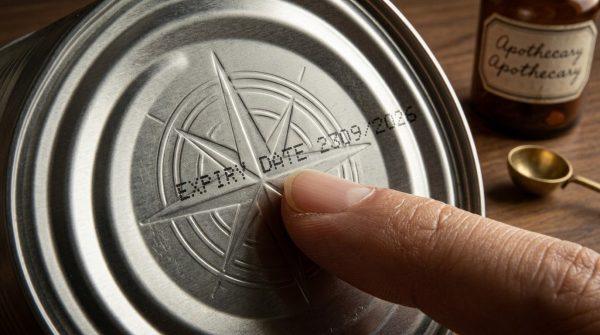
If you've ever stood in your kitchen wondering whether that yogurt is still good after the date on the cup, you're not alone. A recent study from Harvard Law School, Johns Hopkins University, and ReFED found that while 87% of Americans think they understand food labels, only 53% actually interpret them correctly. That confusion leads millions of families to toss perfectly edible food—and it's costing them real money.
California is now leading the charge to fix this. Starting July 1, 2026, the state's AB 660 law will standardize food date labels, banning the confusing 'Sell By' date and requiring just two phrases: 'Best If Used By' for peak quality, and 'Use By' for actual safety limits. New York is expected to follow suit with its own legislation, S7618/A7291, by July 2028. Major retailers like Walmart have already adopted the new system voluntarily.
Why this matters for Latino households
For many Latino families, food is more than sustenance—it's a connection to culture, tradition, and community. Throwing away food that's still good feels wasteful and disrespectful. The California Department of Resources Recycling and Recovery reports that households in the state discard 2.5 billion edible portions each year due to label confusion. That's a lot of arroz con pollo and tamales that never made it to the table.
Financially, the impact is significant. Economic experts calculate that the average family loses close to $1,500 annually buying replacements for items that still retain their nutritional properties. For bicultural Latinos balancing budgets across generations, that's money that could go toward a quinceañera, a family trip to visit relatives in México, or saving for a home.
Environmental costs are equally steep. New York alone sends 3.9 million tons of food waste to landfills each year, where it generates methane—a potent greenhouse gas. The Natural Resources Defense Council has shown that more than 68% of discarded food in urban centers is still perfectly safe to eat. Understanding labels is a simple way to reduce your household's carbon footprint without changing your diet.
How to tell if food is still good
Once you know what the labels mean, you can rely on your senses. The USDA recommends these checks before tossing anything:
- Olfactory verification: Does the product still smell like it normally does? If yes, it's likely fine.
- Visual inspection: Look for obvious color changes or strange textures. A little separation in yogurt or cream is normal.
- Packaging review: Discard anything with an abnormally inflated or deformed package—that can signal bacterial growth.
There is one important exception: infant formula. It is the only federally regulated product with a strict expiration date, so always follow it closely.
For everything else, 'Best If Used By' is about flavor, not safety. As long as the package is intact and the food looks and smells normal, it's almost certainly safe to eat past that date. Trust your nose, not just the label.
This shift in labeling is part of a broader push for food transparency. For Latino families who often cook from scratch and value every ingredient, knowing how to read these labels means less waste, more savings, and a healthier planet. It's a small change that can make a big difference—one cocina at a time.
If you're planning to travel across borders, you might also want to check our guide on what foods you can't bring from Mexico to the US in 2026. And for those renting in New York, our lease renewal guide can help you save thousands this year.