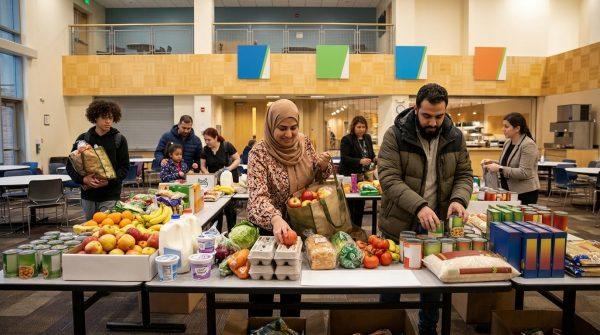
As federal rules for the Supplemental Nutrition Assistance Program (SNAP) get stricter, New York is stepping up with a $26.4 million investment to keep vulnerable families fed. The state’s new Nutrition Navigators program aims to guide more than 340,000 low-income residents through the changing requirements, ensuring they don’t lose their monthly grocery support.
The initiative consolidates two previous SNAP education and outreach efforts that ended on September 30, 2026. Now, 44 community networks across the state will manage public outreach under the watch of the Office of Temporary and Disability Assistance (OTDA). This is a direct response to the federal H.R. 1 law, signed by President Donald Trump in July 2025, which imposed stricter work requirements on SNAP recipients. Under the new rules, individuals who don’t meet mandatory participation hours can only receive benefits for three months in a three-year period.
Navigators help families keep their food assistance
The Nutrition Navigators are more than just a helpline. They offer initial eligibility checks, step-by-step application help, and guidance on how to stay compliant with the new SNAP rules. They also connect families to other programs like WIC for women, infants, and young children, Summer EBT for school breaks, and the National School Lunch Program. This kind of support is crucial, especially for Latino families who may face language barriers or unfamiliarity with the system.
“We know that navigating these changes can be overwhelming,” said a spokesperson for OTDA. “Our navigators are there to make sure no one falls through the cracks.”
To help recipients adapt, the state has directed local social service offices to actively link people with job opportunities, employment search assistance, and volunteer roles. OTDA is also distributing informational materials and training guides to community partners, explaining the new requirements and how to register.
The federal government has also cut its share of SNAP administrative costs from 50% to 25% as of October 1, 2026. To fill that gap, New York is allocating $4.4 million directly to Hunger Solutions New York. This funding will support provider training, research, program evaluation, compliance enforcement, and virtual assistance in 12 counties.
Local funding and community outreach
Navigators will offer both in-person and remote services across all regions. In New York City, direct funding includes $1.56 million to Hunger Free America, $1,461,950 to Voces Latinas, and $400,793 to the Food Bank for New York City. These organizations are on the ground, making sure urban residents get the help they need.
For families in the Bronx or Queens, this means a local advocate who speaks Spanish can help you understand your rights and keep your benefits. It’s a lifeline that goes beyond just a check.
“This is about dignity and survival,” said a representative from Voces Latinas. “We’re here to make sure our community doesn’t go hungry.”
The state encourages all SNAP participants to use these local networks and authorized providers. You can find a navigator near you through the official Nutrition Navigators directory.
While the federal rules are tougher, New York’s increased investment is a reminder that states can step up to protect their residents. For families already dealing with the scourge of EBT card skimming, this support is even more critical.
As the program rolls out, the long-term goal is to keep families stable and self-sufficient. By combining state and local resources, New York is building a safety net that can withstand federal cuts. For working families in places like Buffalo, Albany, or the Bronx, that means one less worry at the dinner table.
For those who qualify, it’s worth checking if you’re also eligible for other benefits like New York’s child tax credit or the college student tax credit. Every bit helps.
In the end, this is about more than just numbers. It’s about ensuring that Latino families across New York can put food on the table, even as the rules change around them.