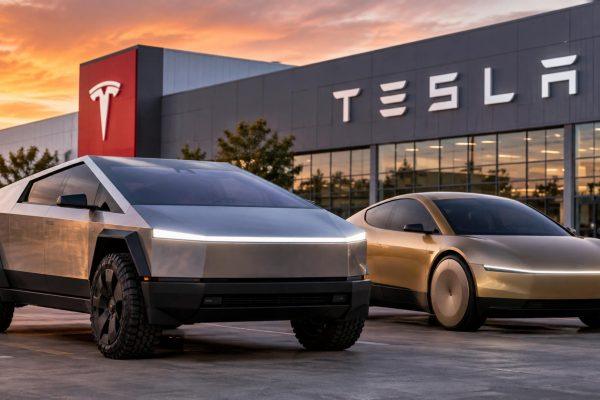
Elon Musk has confirmed a major shift in Tesla's manufacturing strategy: the Cybertruck, the angular electric pickup that has become a symbol of the company's bold design, will no longer be built at the Gigafactory in Texas after mid-2027. The facility will instead be repurposed to accelerate production of the Cybercab, Tesla's autonomous robotaxi, which has already begun carrying passengers in Austin.
This decision marks a significant pivot for Tesla, moving away from consumer vehicles toward a future centered on shared autonomous mobility. The Cybertruck, with its distinctive stainless steel exoskeleton, was produced exclusively at the Austin plant, making this transition particularly notable for the region's manufacturing landscape.
What This Means for Cybertruck Owners and Buyers
For those who have already ordered a Cybertruck, Tesla has promised to fulfill existing reservations before the production line is dismantled. An additional shift will be added to clear the backlog, ensuring that customers who have waited months or even years will still receive their vehicles. The company has also assured owners that service, parts, and warranty support will continue well beyond the production halt.
However, new customers face a different reality. Tesla has raised prices on the Cybertruck by up to 10% across the United States, and has temporarily suspended orders for the lower-tier variants. This move reflects the company's focus on maximizing profitability from the remaining production run, even as it prepares to shift resources elsewhere.
The Cybercab: Tesla's Bet on Autonomous Fleets
The Cybercab represents Tesla's vision for the future of transportation—a two-seater, fully autonomous vehicle designed for ride-hailing services. By reallocating factory space in Texas, Musk is signaling that the company's long-term growth will come from software-driven mobility networks rather than traditional car sales.
This strategic realignment is not without risks. The Cybertruck has developed a cult following, and its discontinuation may disappoint fans who saw it as a symbol of American innovation. Yet, Tesla's leadership appears convinced that the autonomous fleet market offers greater potential for scale and recurring revenue.
For the Latino community in Texas and beyond, this shift could have broader implications. The Gigafactory in Austin has been a major employer in the region, and the transition to Cybercab production may bring new types of jobs, particularly in software and AI. At the same time, the price hikes on the Cybertruck could put the vehicle out of reach for many working-class families, who have been drawn to electric vehicles for their lower operating costs.
As Tesla pivots, it joins a broader trend among automakers to invest heavily in autonomous technology. The success of the Cybercab will depend on regulatory approval and public acceptance, both of which are still evolving. In Texas, where the company has already tested its robotaxis, the infrastructure and legal framework are relatively favorable.
For now, the Cybertruck's legacy is secure as a bold experiment that pushed the boundaries of design and manufacturing. But its time on the production line is drawing to a close, making way for a new era of mobility that Musk believes will redefine how we move through cities.
As the automotive world watches, Tesla's decision underscores a larger question: Will consumers embrace a future where they no longer own cars but summon them on demand? The answer may determine whether this strategic gamble pays off.