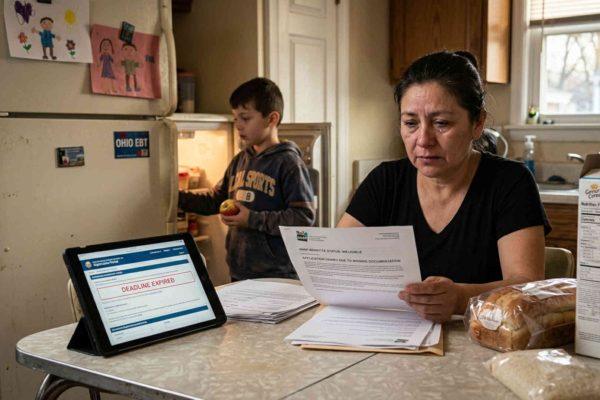
For millions of families across the United States, including many in Latino communities from Los Angeles to Miami, access to basic nutrition has become a bureaucratic nightmare. Since the One Big Beautiful Bill Act took effect last summer, over 3.5 million people have lost their Supplemental Nutrition Assistance Program (SNAP) benefits. While government officials point to a strengthening economy as the reason for declining enrollment, the reality is far more troubling: these cuts are not about economic recovery but about imposing impossible hurdles on those who need help most.
How the New Rules Hurt Latino Families
The changes include raising the age for work requirements and adding layers of paperwork that even eligible applicants cannot navigate. For many Latinos working multiple jobs or managing chronic health issues, the system has become an insurmountable labyrinth. In states like Texas and California, where large Latino populations rely on SNAP, social service offices are understaffed and overwhelmed. When applicants cannot get their documents processed within 30 days, they are automatically removed from the program—even if they submitted everything correctly. This forces them to start the application process from scratch, while hunger becomes a daily reality.
Consider a family in Houston where both parents work in construction and hospitality. They earn just above the poverty line but still qualify for SNAP. Yet the new rules require them to prove work hours weekly, attend in-person interviews, and resubmit paperwork every few months. Missing a single deadline means losing benefits for weeks. This is not a rare case; it is the new normal for millions.
The fraud rate within SNAP is only 1.6 percent, far lower than in other federal programs. Yet the new regulations focus on penalizing payment errors rather than helping families. As a result, the program is pushing away those who need it most, including many Latino households that already face higher rates of food insecurity. According to the USDA, Latino families are nearly twice as likely to experience food insecurity compared to white non-Hispanic households.
Public Health Consequences Loom
Experts warn that these cuts will have severe long-term consequences. Without consistent access to nutritious food, rates of chronic diseases like diabetes, obesity, and heart conditions are expected to rise. For Latino communities, where diabetes prevalence is already higher than the national average, this is a ticking time bomb. A study from the University of California, Berkeley found that food insecurity increases the risk of developing type 2 diabetes by 30 percent.
The economic cost of this crisis will also be steep. Hospitalizations for diet-related illnesses, lost productivity, and increased reliance on emergency food banks will strain public resources. As one policy analyst put it, “We are saving pennies today to spend dollars tomorrow.” The government’s approach is shortsighted, and the most vulnerable—including children, the elderly, and undocumented families with mixed-status households—will bear the brunt.
For Latino families, the stakes are personal. In New York, where utility rebates have helped some households offset costs, the loss of SNAP benefits means choosing between paying rent and buying groceries. In Miami, where the cost of living has skyrocketed, families are turning to food pantries that are already stretched thin. The situation is a stark reminder that economic recovery has not reached everyone equally.
Meanwhile, other news highlights the resilience of Latino communities. For example, Joseph Parra Miguel, an Arizona Latino student, earned $5 million in scholarship offers from 49 universities, showing that determination can overcome barriers. But for millions of families, the barriers to basic nutrition remain overwhelming.
If the United States does not reform its SNAP protocols, we are heading toward a public health crisis that will condemn thousands of families to a cycle of economic and physical vulnerability. The solution is not to cut benefits but to streamline the application process, invest in social service staff, and recognize that food assistance is a fundamental right—not a privilege for the few who can navigate a broken system.