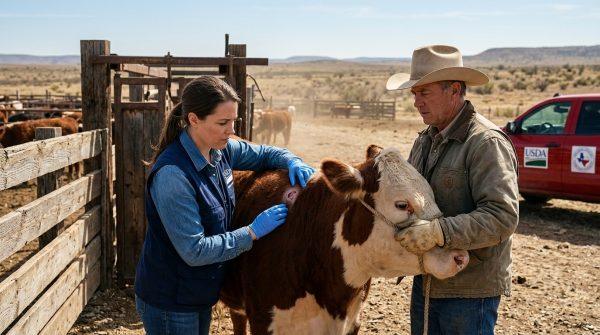
Texas ranchers are facing a serious threat as the screwworm, a flesh-eating parasite, has been confirmed in the state. This outbreak is not just a problem for cattle; it could soon hit your wallet. The USDA Animal and Plant Health Inspection Service is working to contain the spread, but the economic ripple effects are already being felt.
The screwworm, known scientifically as Cochliomyia hominivorax, lays eggs in open wounds of warm-blooded animals. The larvae then feed on living tissue, causing severe damage and often death if untreated. This is a nightmare for livestock producers, especially in a state like Texas, which leads the nation in cattle production.
How This Affects Your Burger
Any disruption in the livestock supply chain quickly translates to higher costs. Slaughterhouses and processors face increased expenses for inspections and treatments, which are passed down to consumers. With the summer barbecue season approaching, families across the U.S., including many in Latino communities, may see a noticeable spike in beef prices at the supermarket.
Food safety specialists warn that production costs are rising due to the need for additional veterinary care, quarantine measures, and constant monitoring. The Texas Animal Health Commission is urging ranchers to report any unusual symptoms in their herds immediately. Early detection is crucial to mitigate the financial impact expected in the coming months.
This isn't just a Texas issue. The screwworm outbreak could affect the national meat supply, putting upward pressure on prices. Financial experts are watching closely, as food inflation could alter consumption patterns, particularly for families who rely on affordable protein sources.
Preventive Measures and Economic Resilience
Ranchers are implementing rigorous veterinary inspections to identify skin lesions caused by the parasite. Strict quarantine protocols are in place for suspected animals, and collaboration with state health authorities is key. Small and medium-scale producers are especially vulnerable, as they may lack the resources to absorb significant losses.
Technical and financial support mechanisms are being established to safeguard farms. Training programs for rural workers on prevention techniques and the correct use of approved insecticides are also underway. These efforts aim to preserve the physical integrity of cattle against this invasive pest.
The economic impact extends beyond the ranch. Consumer price indices are being monitored to project adjustments to family budgets. The direct link between animal health and retail prices shows how an external biological factor can condition the cost of living during periods of agricultural instability.
For Latino communities in Texas, this is a familiar story. The state's economy is deeply tied to agriculture, and many families work in or depend on the livestock industry. The outbreak also echoes broader challenges, like the Texas housing market, where economic shifts can disproportionately affect Latino buyers and sellers.
As the situation develops, public cooperation is essential. Staying informed about the risks associated with the screwworm strengthens the collective response. Shared vigilance is a tool for navigating this complex scenario while Texas ranches work to normalize operations.